Filtering Options:
15 software:
-
 12 screenshots
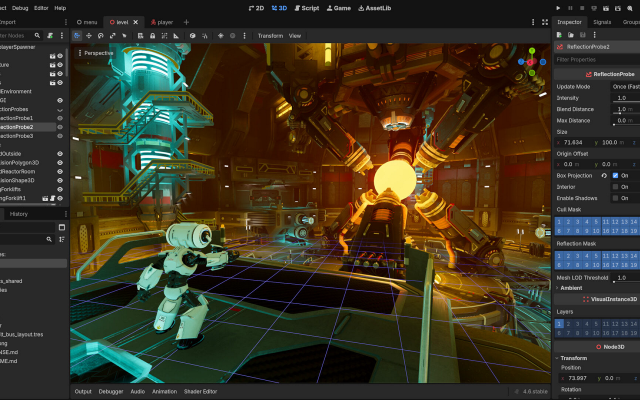
 Godot EngineA free, open source 2D and 3D game engine with excellent pixel art support.Free5Programming
Godot EngineA free, open source 2D and 3D game engine with excellent pixel art support.
Godot EngineA free, open source 2D and 3D game engine with excellent pixel art support.Free5Programming
Godot EngineA free, open source 2D and 3D game engine with excellent pixel art support.Godot has a dedicated 2D renderer with pixel-snapping, nearest neighbour filtering and viewport scaling options that make low-resolution games straightforward.
5 0 pieces -
 LÖVEA free framework for making 2D games in Lua.
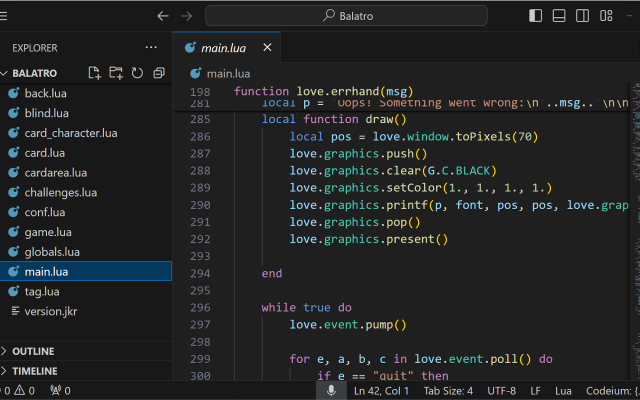
LÖVE is a small, well documented Lua framework with nearest-neighbour filtering and canvases that make pixel-perfect rendering easy.
3 0 pieces -
 PICO-8A fantasy console with a 128×128 screen, 16 colors and everything built in.
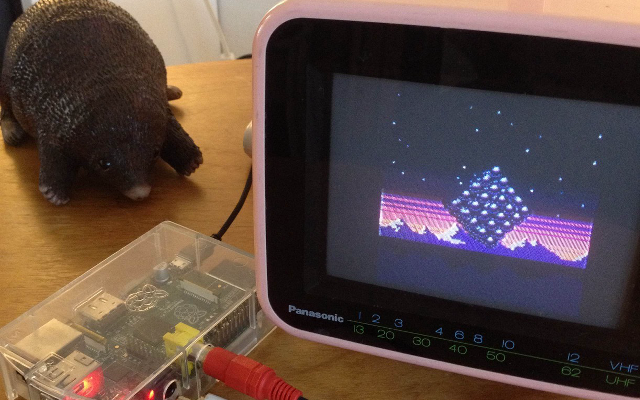
PICO-8 bundles a code editor, sprite editor, map editor, sound effect editor and tracker into one tiny virtual machine with strict limits that keep games small and finishable.
2 2 pieces -
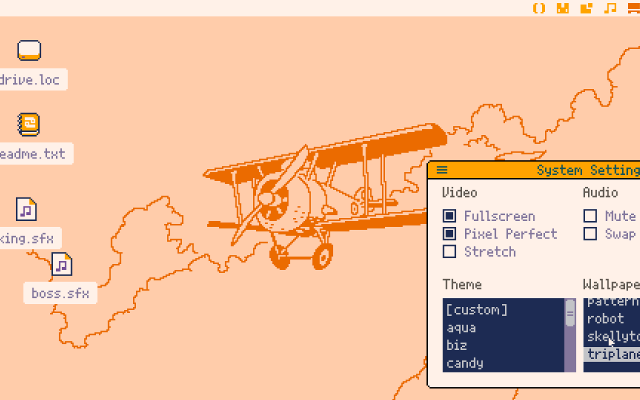 4 screenshotsPicotronA fantasy workstation from the makers of PICO-8, with its own tools and desktop.Paid2Programming
PicotronA fantasy workstation from the makers of PICO-8, with its own tools and desktop.
4 screenshotsPicotronA fantasy workstation from the makers of PICO-8, with its own tools and desktop.Paid2Programming
PicotronA fantasy workstation from the makers of PICO-8, with its own tools and desktop.Picotron is a fantasy workstation from the makers of PICO-8: a small imaginary computer with its own desktop, file system and built-in tools - a sprite editor, a map editor, a tracker and a code editor - all inside fixed limits. It is roomier than PICO-8 and keeps the same deliberately constrained feel.
2 0 pieces -
 2 screenshots
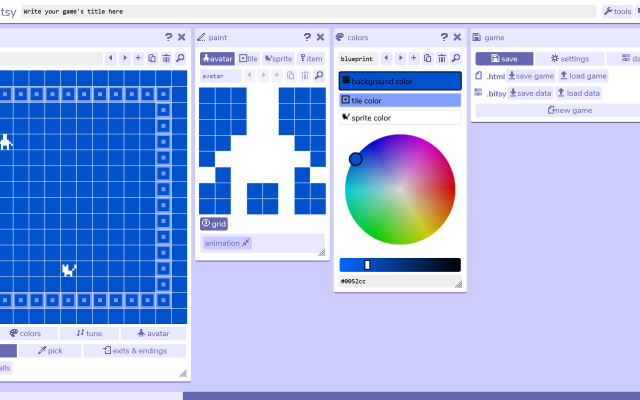
 BitsyA tiny browser editor for little worlds of 8x8 tiles and short conversations.Free1Programming
BitsyA tiny browser editor for little worlds of 8x8 tiles and short conversations.
BitsyA tiny browser editor for little worlds of 8x8 tiles and short conversations.Free1Programming
BitsyA tiny browser editor for little worlds of 8x8 tiles and short conversations.Bitsy is a tiny editor for making small worlds: a few rooms of 8x8 tiles, an avatar that walks around them, and short conversations with the things in them. The limits are the point - there is no scripting to speak of and two colours at a time - and a finished game is a single HTML file.
1 0 pieces -
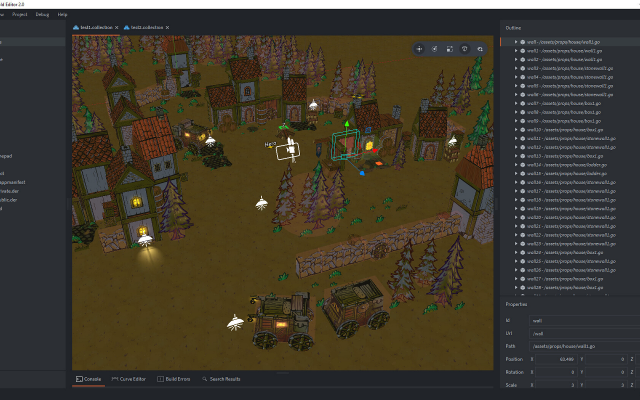 12 screenshotsDefoldA small, free 2D engine that builds tiny games for a lot of platforms.Free1Programming
DefoldA small, free 2D engine that builds tiny games for a lot of platforms.
12 screenshotsDefoldA small, free 2D engine that builds tiny games for a lot of platforms.Free1Programming
DefoldA small, free 2D engine that builds tiny games for a lot of platforms.Defold is a small, free 2D engine that builds unusually light games for desktop, web, mobile and consoles from one project. It is scripted in Lua, ships as a single editor with no licence tiers, and its tilemap and sprite handling suit pixel art directly.
1 0 pieces -
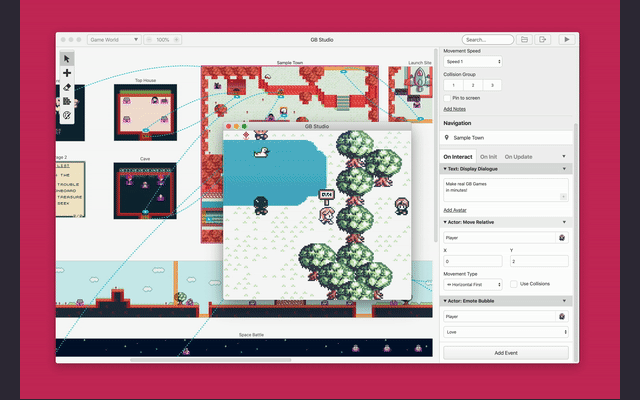
 GB StudioA drag-and-drop Game Boy game creator that builds real ROMs.
GB Studio makes Game Boy and Game Boy Color games with a visual scripting editor and exports ROMs that run on real hardware and on the web.
1 0 pieces -
 6 screenshots
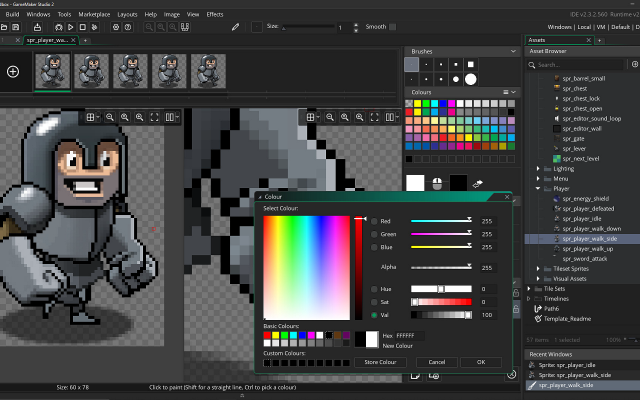
 GameMakerThe 2D engine behind Undertale, Hyper Light Drifter and Katana ZERO.Freemium1Programming
GameMakerThe 2D engine behind Undertale, Hyper Light Drifter and Katana ZERO.
GameMakerThe 2D engine behind Undertale, Hyper Light Drifter and Katana ZERO.Freemium1Programming
GameMakerThe 2D engine behind Undertale, Hyper Light Drifter and Katana ZERO.GameMaker is a 2D-first engine with a built-in sprite editor and room editor, used by many of the best known pixel art games.
1 0 pieces -
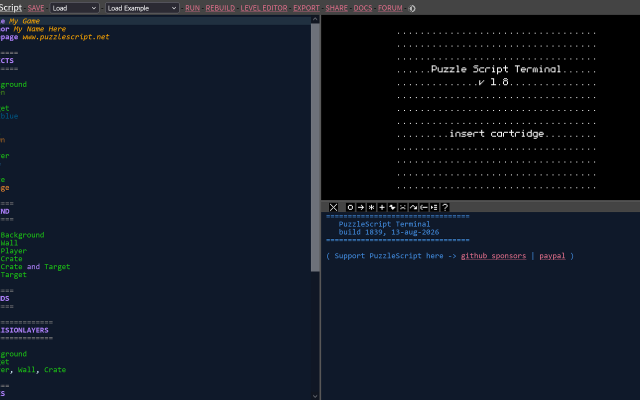
PuzzleScriptWrites a whole puzzle game as a short text file in the browser.
PuzzleScript is a browser engine where an entire puzzle game is a short text file: a legend of characters, a set of rewrite rules, and the levels drawn as ASCII. Games run and share as a single link, which has made it the usual home for small tile-based puzzle experiments.
1 0 pieces -
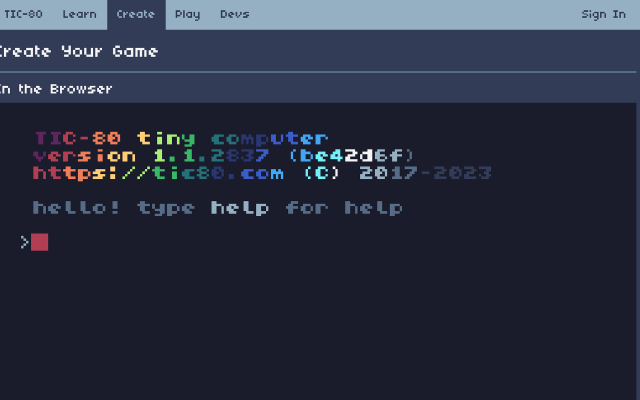
 TIC-80A free and open source fantasy computer with a 240×136 screen.
TIC-80 is an open source fantasy console in the PICO-8 mould with a larger screen, several scripting languages, and built-in sprite, map, sound and music editors.
1 0 pieces -
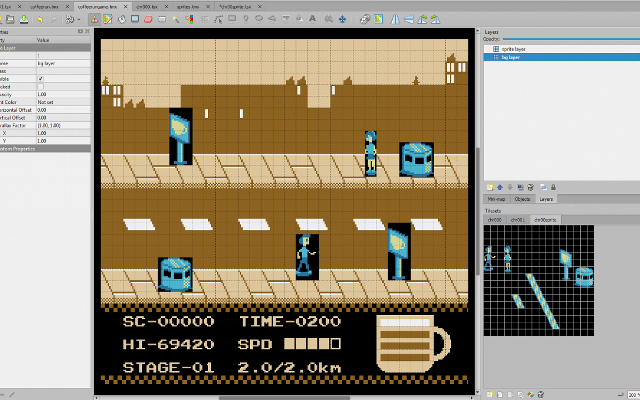
 GBDK-2020The C development kit for Game Boy homebrew.
GBDK-2020 is the maintained fork of the Game Boy Development Kit: a C compiler, libraries and tools targeting the Game Boy, Game Boy Color, Game Gear and more.
0 0 pieces -
 6 screenshots
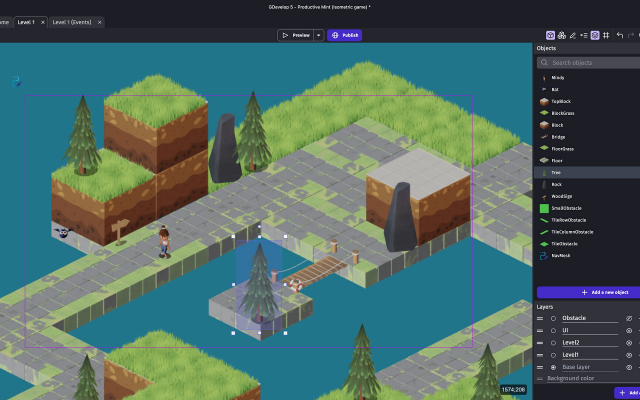
 GDevelopA no-code game engine with an event sheet instead of a scripting language.Freemium0Programming
GDevelopA no-code game engine with an event sheet instead of a scripting language.
GDevelopA no-code game engine with an event sheet instead of a scripting language.Freemium0Programming
GDevelopA no-code game engine with an event sheet instead of a scripting language.GDevelop builds games out of events - conditions and actions picked from a list - rather than code, which makes it a common first engine. It handles tilemaps, 2D lighting, physics and multiplayer, exports to web, desktop and mobile, and the underlying engine is open source.
0 0 pieces -
 5 screenshots
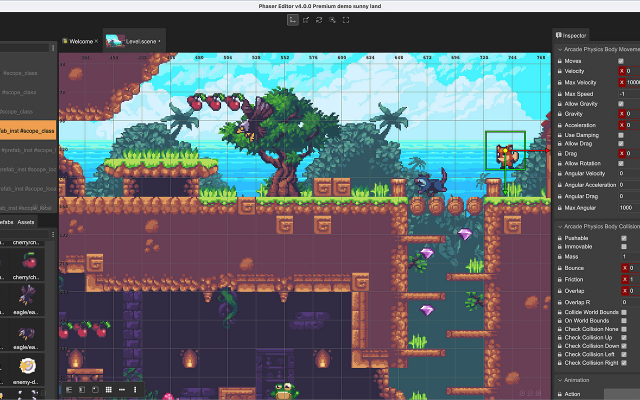
 PhaserThe most used JavaScript framework for 2D games in the browser.Free0Programming
PhaserThe most used JavaScript framework for 2D games in the browser.
PhaserThe most used JavaScript framework for 2D games in the browser.Free0Programming
PhaserThe most used JavaScript framework for 2D games in the browser.Phaser is the most used JavaScript framework for 2D games in the browser. It covers sprites, tilemaps, physics, input, audio and scene management, has a very large body of examples and tutorials behind it, and runs anywhere a browser does.
0 0 pieces -
 4 screenshots
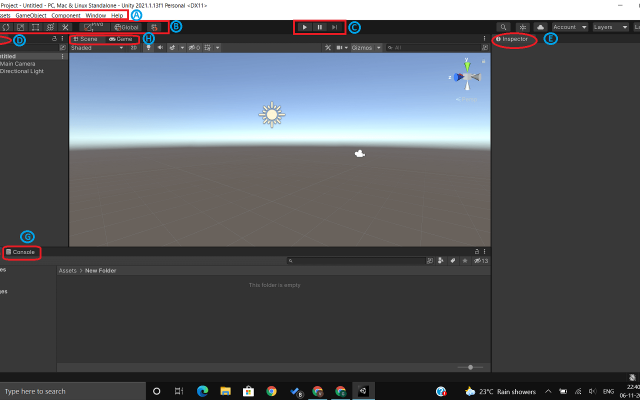
 UnityA general game engine with a widely used 2D pixel art pipeline.Freemium0Programming
UnityA general game engine with a widely used 2D pixel art pipeline.
UnityA general game engine with a widely used 2D pixel art pipeline.Freemium0Programming
UnityA general game engine with a widely used 2D pixel art pipeline.Unity is a general-purpose game engine with a well-worn 2D pipeline: a sprite editor and atlas packer, a tilemap system with rule tiles, 2D lights and shadows, and a large asset store. It is heavier than the dedicated 2D engines, and in return it goes anywhere.
0 0 pieces -
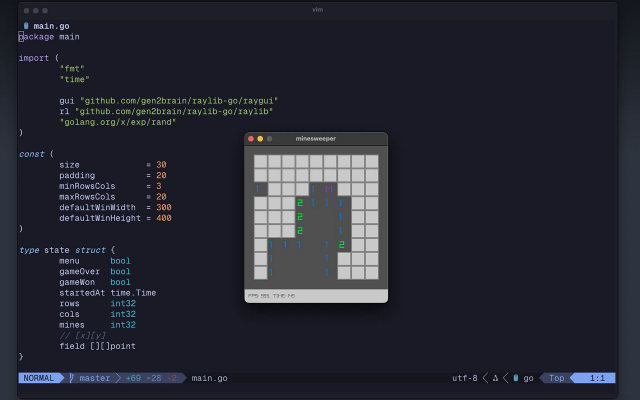
 raylibA simple and easy-to-use C library for making games.
raylib is a no-dependencies C library with bindings for dozens of languages, well suited to small low-resolution games.
0 0 pieces
There are no more software for your current criteria.
There are no software for your current criteria.
AD| join Patreon to remove ads!
Thanks for your feedback! If you want to say more, please post a Suggestion or Bug Report!
our next patreon goal: $263 / $500