Filtering Options:
49 software:
-
 4 screenshots
 voidspriteopen-source pixel art editor with extensive format support and features useful for game developmentFree24Pixel Art
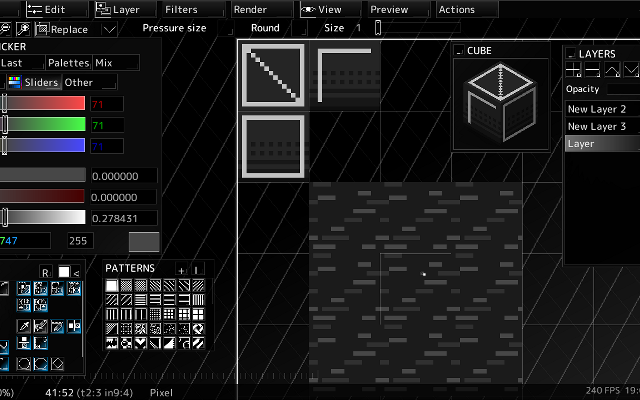
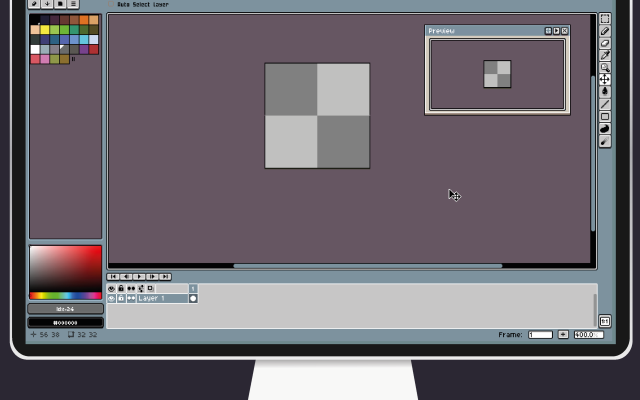
voidspriteopen-source pixel art editor with extensive format support and features useful for game developmentvoid◆sprite is an actively developed cross-platform, open-source pixelart editor.
voidspriteopen-source pixel art editor with extensive format support and features useful for game developmentFree24Pixel Art
voidspriteopen-source pixel art editor with extensive format support and features useful for game developmentvoid◆sprite is an actively developed cross-platform, open-source pixelart editor.
Has features useful for game development, such as split sessions (multiple files on one canvas) and previews of spritesheet animations, tilesets or 3D cubes.
Other unique features include: layer variants, on-canvas comments, custom patterns, templates and real-time LAN collaboration.
Supports many image formats, including some specific to other editors like Aseprite and GraphicsGale.
Most common color palette formats are supported too, and can be used in a separate indexed editor mode.Features:animationlayerspalette manipulationsprite sheet exportonlinetilemaps2dtilescross platformsprite editorimage conversionccollaboration24 6 pieces updated 23 days ago -
 12 screenshots
 Godot EngineA free, open source 2D and 3D game engine with excellent pixel art support.Free5Programming
Godot EngineA free, open source 2D and 3D game engine with excellent pixel art support.
Godot EngineA free, open source 2D and 3D game engine with excellent pixel art support.Free5Programming
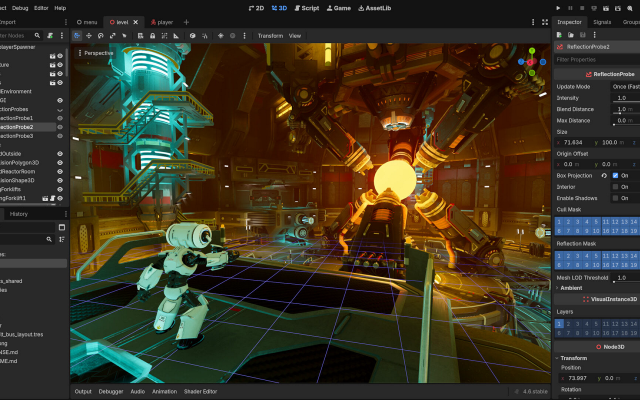
Godot EngineA free, open source 2D and 3D game engine with excellent pixel art support.Godot has a dedicated 2D renderer with pixel-snapping, nearest neighbour filtering and viewport scaling options that make low-resolution games straightforward.
5 0 pieces -
 3 screenshots
 NovaboardA web-based pixel art editor that also runs on the desktop.Free5Pixel Art
NovaboardA web-based pixel art editor that also runs on the desktop.
NovaboardA web-based pixel art editor that also runs on the desktop.Free5Pixel Art
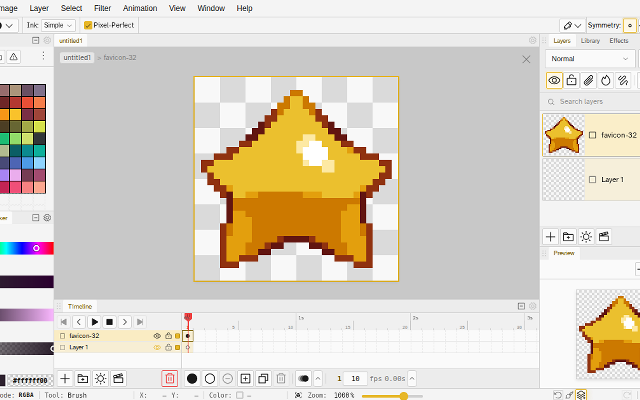
NovaboardA web-based pixel art editor that also runs on the desktop.Novaboard runs in the browser and as a desktop app, with layers, animation and effects.
Features:animationlayerspalette manipulation3d model exportonion skinningonlinesprite sheet export2dcustom brusheseffectssprite editorcross platform5 0 pieces -
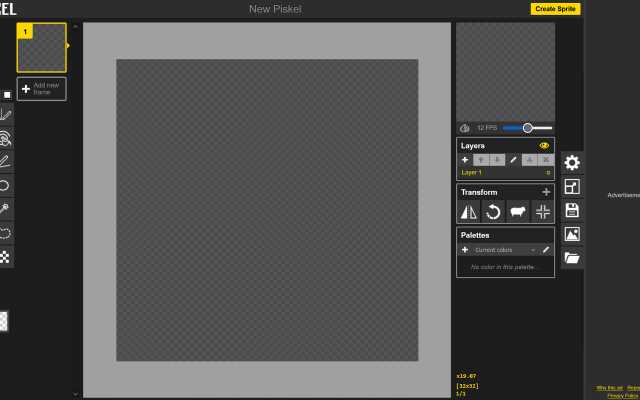
 PiskelA simple online pixel art and animated sprite editor.
Piskel is an open source editor that runs in the browser, with layers, animation and a public gallery. Development has stopped, but it still works and is a common first editor.
4 48 pieces -
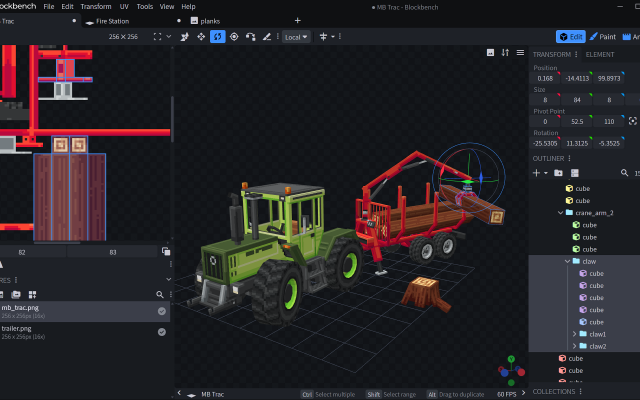
 BlockbenchA low-poly 3D modeling program
Blockbench is a free and open source editor for low-poly models with pixel art textures. Models can be exported into standard 3D formats, to be shared, rendered, 3D-printed, or used in game engines or games line Minecraft. Modeling, UV mapping, texturing with pixel-art tools, rigging and animating, can all be done in the program.
Blockbench has a clean and beginner friendly interface, but also offers lots of customization and advanced features for experienced 3D artists. Plugins can extend the functionality of the program even further.
Features:low polymodel exportanimationlayerspalette manipulation3d model exportonion skinningcross platformriggingtexture paintingcollaborationnormal mapspluginsuv mapping3d modellingreference plane4 28 pieces -
 4 screenshots
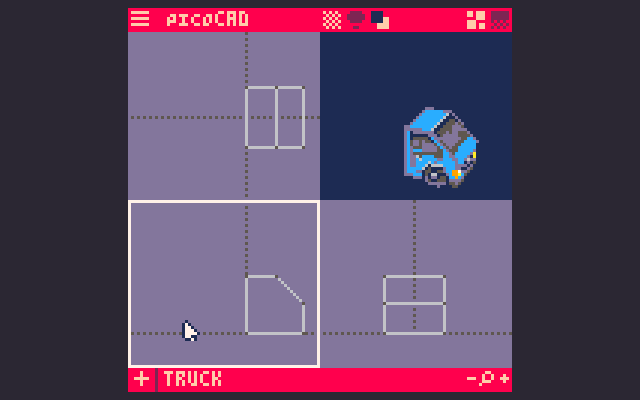
 picoCADA tiny low-poly modeller that paints every model with one small texture sheet.Paid4Low-Poly
picoCADA tiny low-poly modeller that paints every model with one small texture sheet.
picoCADA tiny low-poly modeller that paints every model with one small texture sheet.Paid4Low-Poly
picoCADA tiny low-poly modeller that paints every model with one small texture sheet.picoCAD builds small low-poly models out of a handful of shapes and textures them with a single tiny texture sheet, in a deliberately constrained toolset. Models and turntable renders export straight out of it.
4 9 pieces -
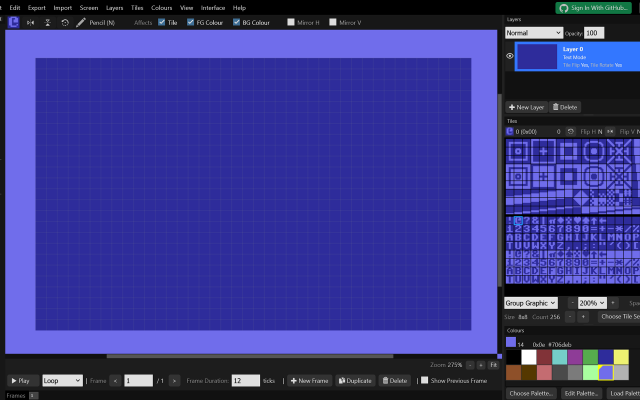
 lvllvlA browser textmode editor covering PETSCII, ASCII and dozens of other character sets.
lvllvl is a browser editor for character-based art. It covers PETSCII and a long list of other machines' character sets, with layers, animation frames, custom tilesets and palettes, and it can generate frames from an uploaded image or video. Projects save to the browser, to GitHub or to Google Drive.
4 3 pieces -
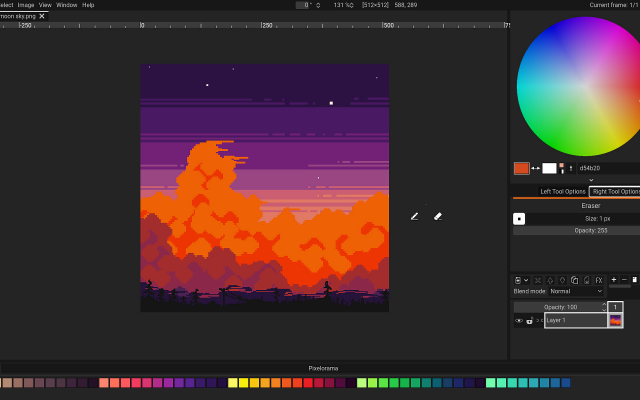
 PixeloramaA free, open source pixel art editor made with Godot.
Pixelorama is a full featured free editor: layers, animation with onion skinning, tile mode, palettes, and an active development pace. It runs on every desktop platform and in the browser.
3 23 pieces -
 4 screenshots
 DeckerA multimedia platform for creating interactive documents, with sound, images, hypertext and scripted behavior.Pay What You Want3Other Low-Spec
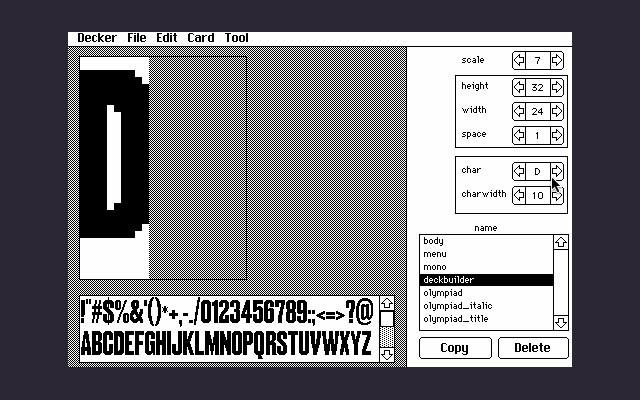
DeckerA multimedia platform for creating interactive documents, with sound, images, hypertext and scripted behavior.Decker is a program where you can make art, games, zines, personal applications and more. It can be thought of as a stack of sticky notes for spatially organizing your thoughts and making quick prototypes, and several other programs have been created with it.3 0 pieces
DeckerA multimedia platform for creating interactive documents, with sound, images, hypertext and scripted behavior.Pay What You Want3Other Low-Spec
DeckerA multimedia platform for creating interactive documents, with sound, images, hypertext and scripted behavior.Decker is a program where you can make art, games, zines, personal applications and more. It can be thought of as a stack of sticky notes for spatially organizing your thoughts and making quick prototypes, and several other programs have been created with it.3 0 pieces -
 3 screenshots
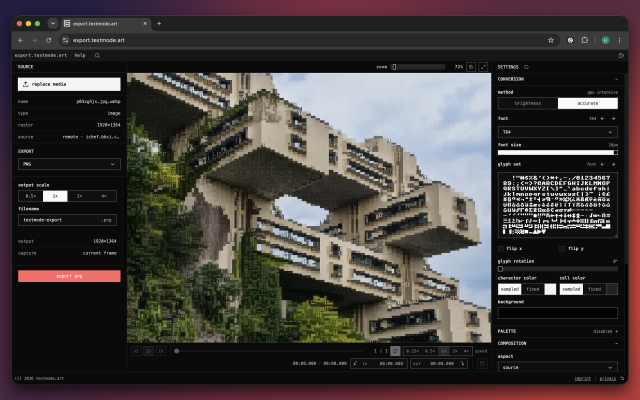
 export.textmode.artA browser converter for turning images, GIFs, and video into configurable textmode art.Free3Textmode
export.textmode.artA browser converter for turning images, GIFs, and video into configurable textmode art.export.textmode.art converts images, animated GIFs, video, and direct media links into textmode art in the browser. It provides glyph, font, palette, color, framing, and post-processing controls, plus frame-accurate playback and export ranges for animated sources. Everything is processed locally in your browser, and outputs include raster, vector, text, JSON, frame-sequence ZIP, GIF, MP4, and WebM downloads.3 0 pieces
export.textmode.artA browser converter for turning images, GIFs, and video into configurable textmode art.Free3Textmode
export.textmode.artA browser converter for turning images, GIFs, and video into configurable textmode art.export.textmode.art converts images, animated GIFs, video, and direct media links into textmode art in the browser. It provides glyph, font, palette, color, framing, and post-processing controls, plus frame-accurate playback and export ranges for animated sources. Everything is processed locally in your browser, and outputs include raster, vector, text, JSON, frame-sequence ZIP, GIF, MP4, and WebM downloads.3 0 pieces -
 PICO-8A fantasy console with a 128×128 screen, 16 colors and everything built in.
PICO-8 bundles a code editor, sprite editor, map editor, sound effect editor and tracker into one tiny virtual machine with strict limits that keep games small and finishable.
2 2 pieces -
 3 screenshotsBitFontMaker2A browser grid editor for bitmap fonts, one glyph at a time.Free2Pixel Art
BitFontMaker2A browser grid editor for bitmap fonts, one glyph at a time.
3 screenshotsBitFontMaker2A browser grid editor for bitmap fonts, one glyph at a time.Free2Pixel Art
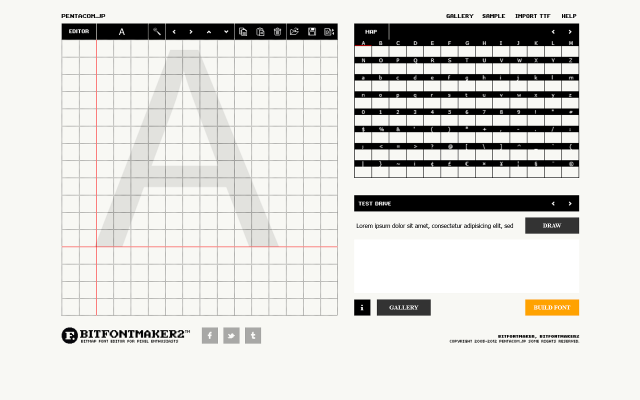
BitFontMaker2A browser grid editor for bitmap fonts, one glyph at a time.BitFontMaker2 is a bitmap font editor that runs in a browser: draw each character on a small grid, set the widths, and download a TrueType file. It has been around a long time and stayed simple, which is why it is still the quickest way to get a pixel font out of an idea.
2 0 pieces -
 2 screenshotsWigglypaintA pixel painting program where all the lines wobble and move.Free2Pixel Art
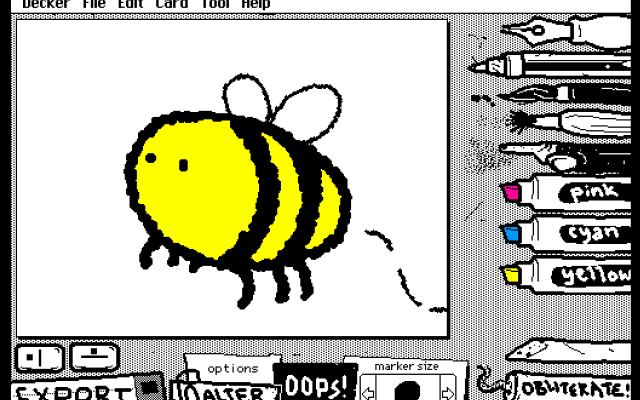
WigglypaintA pixel painting program where all the lines wobble and move.Wigglypaint is a basic drawing program similar to MS Paint, but every mark you make moves in a different way depending on the tool. Images are exported as animated GIFs.2 0 pieces
2 screenshotsWigglypaintA pixel painting program where all the lines wobble and move.Free2Pixel Art
WigglypaintA pixel painting program where all the lines wobble and move.Wigglypaint is a basic drawing program similar to MS Paint, but every mark you make moves in a different way depending on the tool. Images are exported as animated GIFs.2 0 pieces -
 2 screenshots
 create.textmode.artA visual canvas for drawing and animating textmode art in the browser.Free2Textmode
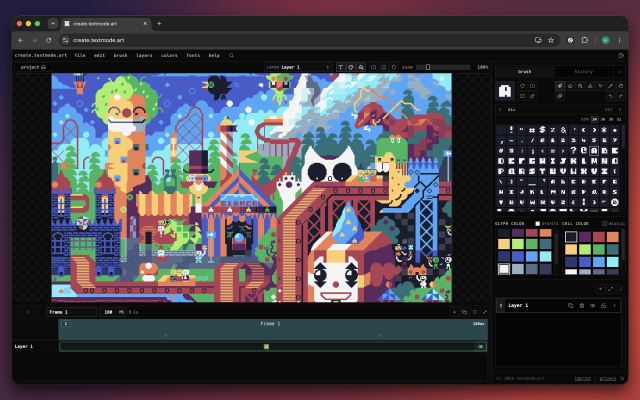
create.textmode.artA visual canvas for drawing and animating textmode art in the browser.create.textmode.art is a browser workspace for character-grid drawing and animation. Each layer can use its own bundled or custom 8 × 8 font, opacity, and blend mode. The app also supports frame animation, Lospec and .hex palettes. It exports still images as PNG or SVG, and frame animations or drawing-history timelapses as GIF, MP4, or WebM, and saves portable .textmode project files.2 0 pieces
create.textmode.artA visual canvas for drawing and animating textmode art in the browser.Free2Textmode
create.textmode.artA visual canvas for drawing and animating textmode art in the browser.create.textmode.art is a browser workspace for character-grid drawing and animation. Each layer can use its own bundled or custom 8 × 8 font, opacity, and blend mode. The app also supports frame animation, Lospec and .hex palettes. It exports still images as PNG or SVG, and frame animations or drawing-history timelapses as GIF, MP4, or WebM, and saves portable .textmode project files.2 0 pieces -
 LibreSpriteA free, open source fork of Aseprite from before its license changed.
LibreSprite continues the last GPL version of Aseprite as a community project. It keeps the familiar layers, animation timeline and palette tools, and adds its own scripting and a browser build.
1 26 pieces -
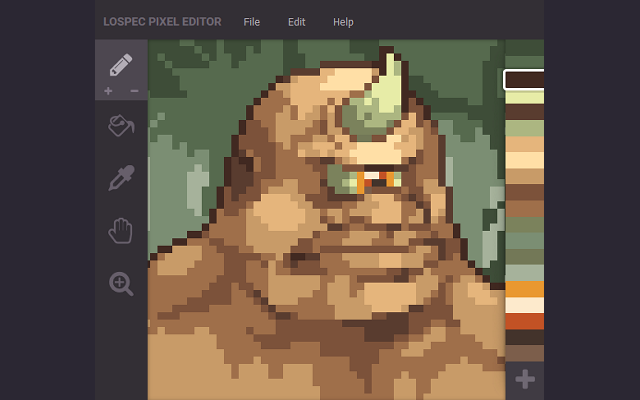 2 screenshots
 Lospec Pixel EditorLospec's own simple browser editor, no longer in development.Free1Pixel Art
Lospec Pixel EditorLospec's own simple browser editor, no longer in development.
Lospec Pixel EditorLospec's own simple browser editor, no longer in development.Free1Pixel Art
Lospec Pixel EditorLospec's own simple browser editor, no longer in development.A basic web-based editor made to be simple and intuitive, which can load any palette from the Lospec palette list. It is no longer in development and may contain bugs.
Features:palette list integration1 4 pieces -
 0 screenshotsBeepBoxBeepBox is a simple, free, open-source, browser-based chiptune sketcherFree1Chiptune
BeepBoxBeepBox is a simple, free, open-source, browser-based chiptune sketcherBeepBox (and it's many many forks) is a free, open-source, browser-based chiptune sketcher. Compose with square, triangle, sawtooth, FM, and noise channels. Your whole song lives in the URL — copy the link, paste it anywhere, the song is there. No accounts, no uploads, no install.1 0 pieces
0 screenshotsBeepBoxBeepBox is a simple, free, open-source, browser-based chiptune sketcherFree1Chiptune
BeepBoxBeepBox is a simple, free, open-source, browser-based chiptune sketcherBeepBox (and it's many many forks) is a free, open-source, browser-based chiptune sketcher. Compose with square, triangle, sawtooth, FM, and noise channels. Your whole song lives in the URL — copy the link, paste it anywhere, the song is there. No accounts, no uploads, no install.1 0 pieces -
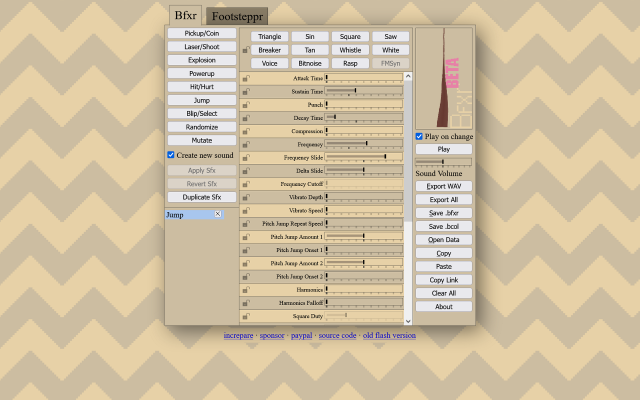
BfxrAn expanded sfxr with more synths, mixing and a browser version.
Bfxr adds new waveforms, filters and a mixer to the sfxr formula, and runs in the browser.
1 0 pieces -
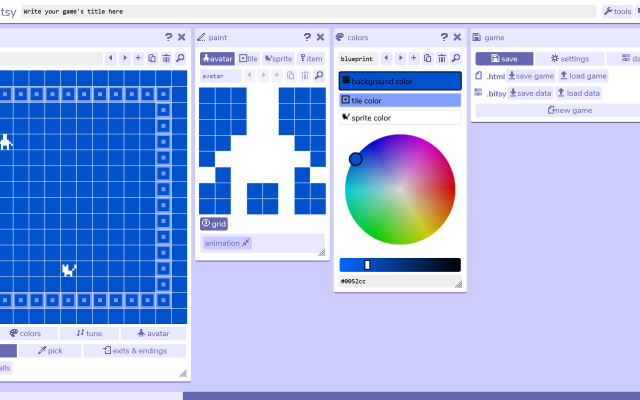 2 screenshots
 BitsyA tiny browser editor for little worlds of 8x8 tiles and short conversations.Free1Programming
BitsyA tiny browser editor for little worlds of 8x8 tiles and short conversations.
BitsyA tiny browser editor for little worlds of 8x8 tiles and short conversations.Free1Programming
BitsyA tiny browser editor for little worlds of 8x8 tiles and short conversations.Bitsy is a tiny editor for making small worlds: a few rooms of 8x8 tiles, an avatar that walks around them, and short conversations with the things in them. The limits are the point - there is no scripting to speak of and two colours at a time - and a finished game is a single HTML file.
1 0 pieces -
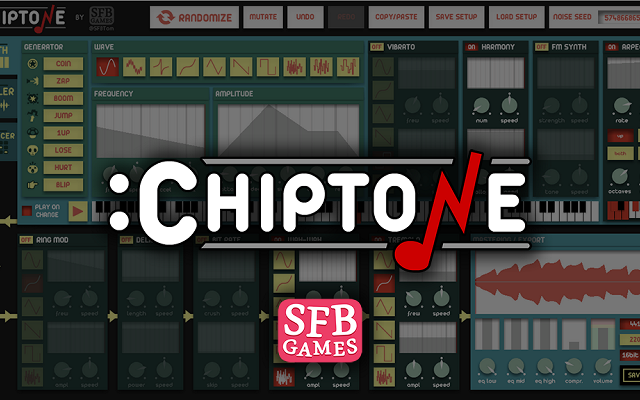
 ChipToneA free, deep sound effect generator with a visual interface.
ChipTone builds sound effects from layered oscillators, envelopes and effects with a lot more control than an sfxr style generator.
1 0 pieces -
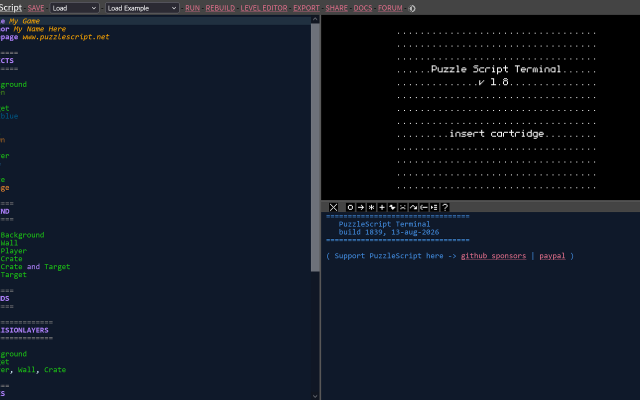
PuzzleScriptWrites a whole puzzle game as a short text file in the browser.
PuzzleScript is a browser engine where an entire puzzle game is a short text file: a legend of characters, a set of rewrite rules, and the levels drawn as ASCII. Games run and share as a single link, which has made it the usual home for small tile-based puzzle experiments.
1 0 pieces -
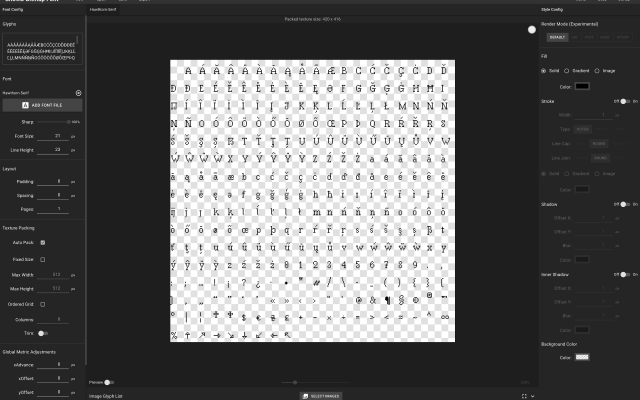
 SnowBamboo BMFTTF to PNG bitmap font converter.The software allows you to convert any TrueType font (TTF) into a PNG bitmap font sheet, along with JSON, FNT, or TXT files containing spacing and kerning data. The exported bitmap fonts are ready to use in most game engines.
You can adjust spacing, add special visual effects to your font, and preview the final bitmap font live in the app.
1 0 pieces -
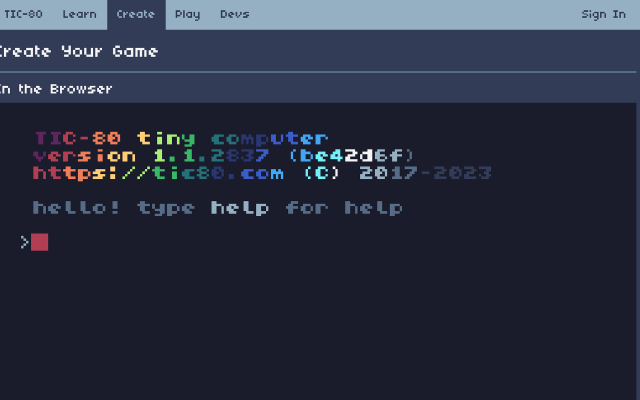
 TIC-80A free and open source fantasy computer with a 240×136 screen.
TIC-80 is an open source fantasy console in the PICO-8 mould with a larger screen, several scripting languages, and built-in sprite, map, sound and music editors.
1 0 pieces -
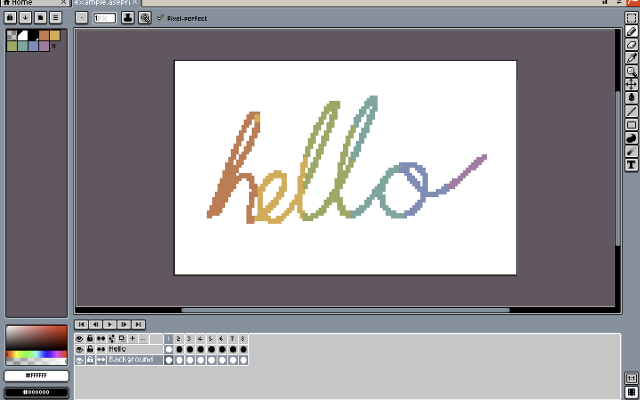
 XpriteFree, open-source pixel art and animation editor for the browser.Xprite is a free, open-source browser-based editor for pixel art, sprites, and frame-by-frame animation. It provides drawing tools, layers, animation frames and tags, palette controls, and export to PNG, GIF, and sprite sheets. It runs in modern browsers and can be installed as a PWA on supported desktop and mobile devices.
The editor opens and saves .ase and .aseprite projects. It supports mouse, touch, and stylus input, with panels that can be moved, resized, and combined into a custom workspace. The interface is available in English and Simplified Chinese.
Core editing runs locally on the user's device. Browser-saved projects do not automatically sync between devices, so downloadable project files should be kept as backups.
Xprite is is an independent project inspired by Aseprite and LibreSprite, and is not affiliated with or endorsed by Aseprite or Igara Studio.1 0 pieces
There are no more software for your current criteria.
There are no software for your current criteria.
AD| join Patreon to remove ads!
Thanks for your feedback! If you want to say more, please post a Suggestion or Bug Report!
our next patreon goal: $263 / $500