Filtering Options:
12 software:
-
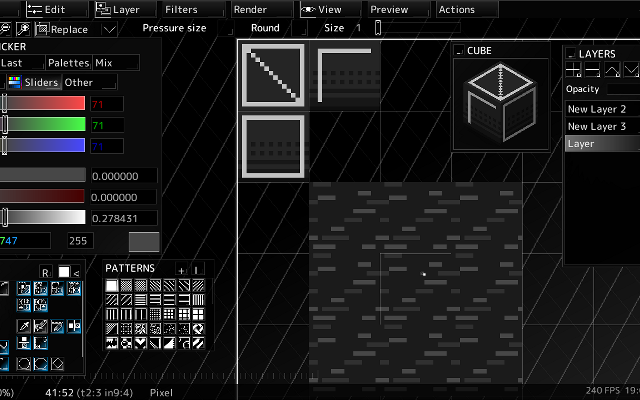 4 screenshots
 voidspriteopen-source pixel art editor with extensive format support and features useful for game developmentFree24Pixel Art
voidspriteopen-source pixel art editor with extensive format support and features useful for game developmentvoid◆sprite is an actively developed cross-platform, open-source pixelart editor.
voidspriteopen-source pixel art editor with extensive format support and features useful for game developmentFree24Pixel Art
voidspriteopen-source pixel art editor with extensive format support and features useful for game developmentvoid◆sprite is an actively developed cross-platform, open-source pixelart editor.
Has features useful for game development, such as split sessions (multiple files on one canvas) and previews of spritesheet animations, tilesets or 3D cubes.
Other unique features include: layer variants, on-canvas comments, custom patterns, templates and real-time LAN collaboration.
Supports many image formats, including some specific to other editors like Aseprite and GraphicsGale.
Most common color palette formats are supported too, and can be used in a separate indexed editor mode.Features:animationlayerspalette manipulationsprite sheet exportonlinetilemaps2dtilescross platformsprite editorimage conversionccollaboration24 6 pieces updated 23 days ago -
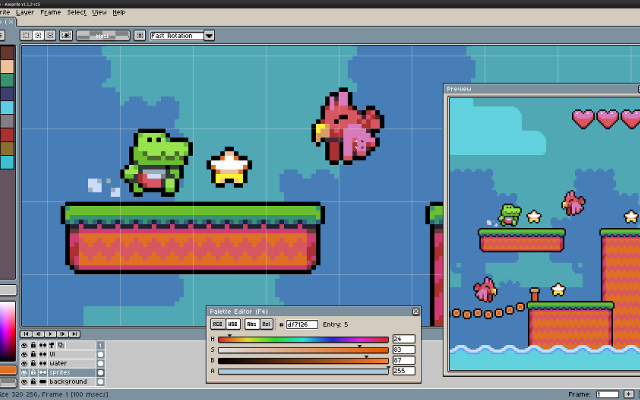 6 screenshots
 AsepriteThe most popular dedicated pixel art editor, with animation, tilemaps and a scripting API.Paid18Pixel Art
AsepriteThe most popular dedicated pixel art editor, with animation, tilemaps and a scripting API.
AsepriteThe most popular dedicated pixel art editor, with animation, tilemaps and a scripting API.Paid18Pixel Art
AsepriteThe most popular dedicated pixel art editor, with animation, tilemaps and a scripting API.Aseprite is a pixel art editor built around sprite work: an indexed-color workflow, onion skinning and a timeline for animation, tilemap layers, custom brushes, and export straight to sprite sheets. Extensions and Lua scripts add anything it lacks. It is the editor most Lospec artists reach for first.
Features:layersanimationonion skinningtilemapscustom brushespalette manipulationscriptingsprite sheet export18 451 pieces -
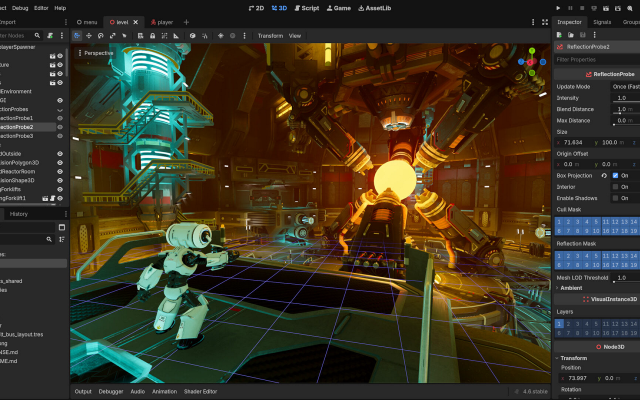 12 screenshots
 Godot EngineA free, open source 2D and 3D game engine with excellent pixel art support.Free5Programming
Godot EngineA free, open source 2D and 3D game engine with excellent pixel art support.
Godot EngineA free, open source 2D and 3D game engine with excellent pixel art support.Free5Programming
Godot EngineA free, open source 2D and 3D game engine with excellent pixel art support.Godot has a dedicated 2D renderer with pixel-snapping, nearest neighbour filtering and viewport scaling options that make low-resolution games straightforward.
5 0 pieces -
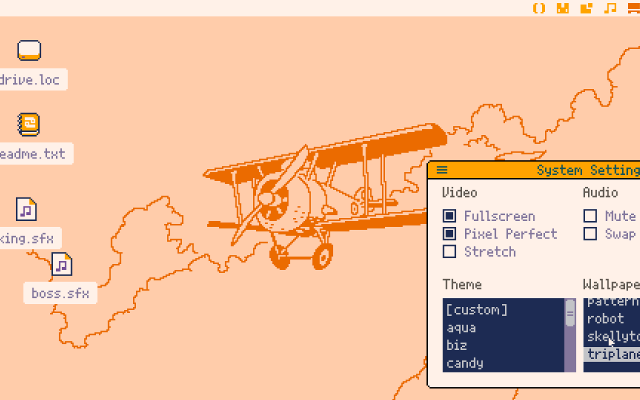 4 screenshotsPicotronA fantasy workstation from the makers of PICO-8, with its own tools and desktop.Paid2Programming
 PicotronA fantasy workstation from the makers of PICO-8, with its own tools and desktop.
Picotron is a fantasy workstation from the makers of PICO-8: a small imaginary computer with its own desktop, file system and built-in tools - a sprite editor, a map editor, a tracker and a code editor - all inside fixed limits. It is roomier than PICO-8 and keeps the same deliberately constrained feel.
2 0 pieces -
 2 screenshots
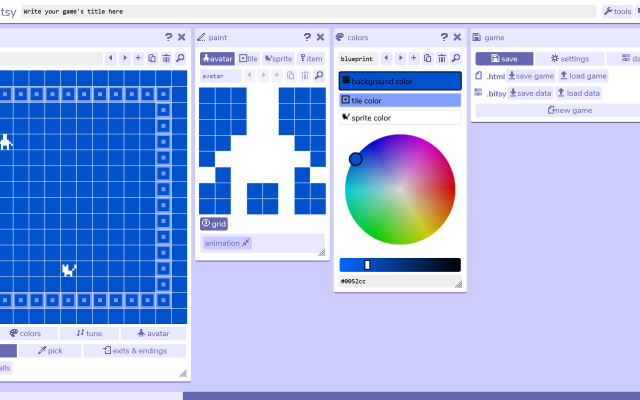
 BitsyA tiny browser editor for little worlds of 8x8 tiles and short conversations.Free1Programming
BitsyA tiny browser editor for little worlds of 8x8 tiles and short conversations.
BitsyA tiny browser editor for little worlds of 8x8 tiles and short conversations.Free1Programming
BitsyA tiny browser editor for little worlds of 8x8 tiles and short conversations.Bitsy is a tiny editor for making small worlds: a few rooms of 8x8 tiles, an avatar that walks around them, and short conversations with the things in them. The limits are the point - there is no scripting to speak of and two colours at a time - and a finished game is a single HTML file.
1 0 pieces -
 12 screenshotsDefoldA small, free 2D engine that builds tiny games for a lot of platforms.Free1Programming
DefoldA small, free 2D engine that builds tiny games for a lot of platforms.
12 screenshotsDefoldA small, free 2D engine that builds tiny games for a lot of platforms.Free1Programming
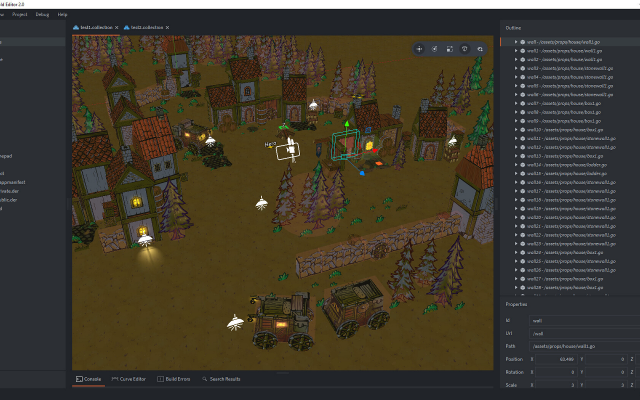
DefoldA small, free 2D engine that builds tiny games for a lot of platforms.Defold is a small, free 2D engine that builds unusually light games for desktop, web, mobile and consoles from one project. It is scripted in Lua, ships as a single editor with no licence tiers, and its tilemap and sprite handling suit pixel art directly.
1 0 pieces -
 TiledThe general purpose 2D level and tilemap editor.
Tiled is a flexible tilemap editor supporting orthogonal, isometric and hexagonal maps, with importers for most engines.
1 0 pieces -
 9 screenshots
 Pixel StudioA cross-platform pixel art editor that syncs the same project between desktop and phone.Freemium0Pixel Art
Pixel StudioA cross-platform pixel art editor that syncs the same project between desktop and phone.
Pixel StudioA cross-platform pixel art editor that syncs the same project between desktop and phone.Freemium0Pixel Art
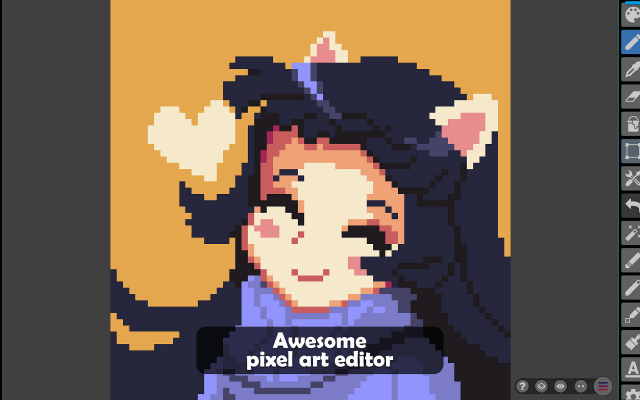
Pixel StudioA cross-platform pixel art editor that syncs the same project between desktop and phone.Pixel Studio is a pixel art editor that runs on desktop, phone and tablet with the same project open on all of them. It covers layers, animation with onion skinning, tilesets and palettes, and reads and writes Aseprite files, which makes it a practical way to keep drawing away from a desk.
0 9 pieces -
 4 screenshots
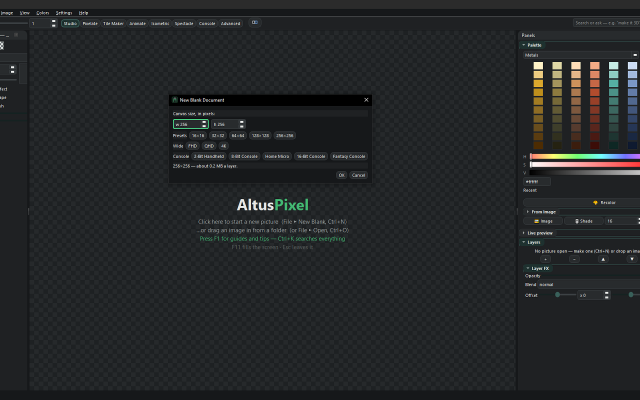
 AltusPixelPixel art editor, including animation, rigging, and palettes, and GameMaker projects...Paid0Pixel Art
AltusPixelPixel art editor, including animation, rigging, and palettes, and GameMaker projects...Paid $7.99 USD; one price, no DLC, updates included Pixel Art EditorsAnimation ToolsTile & Map EditorsPalette ToolsFont & Charset ToolsConverters & Scalers ActiveAltusPixel is a pixel art editor for game developers, sold on Steam for Windows and Linux. It is a single offline desktop application with no account.
AltusPixelPixel art editor, including animation, rigging, and palettes, and GameMaker projects...Paid0Pixel Art
AltusPixelPixel art editor, including animation, rigging, and palettes, and GameMaker projects...Paid $7.99 USD; one price, no DLC, updates included Pixel Art EditorsAnimation ToolsTile & Map EditorsPalette ToolsFont & Charset ToolsConverters & Scalers ActiveAltusPixel is a pixel art editor for game developers, sold on Steam for Windows and Linux. It is a single offline desktop application with no account.
Engine Export: complete GameMaker project exports (sprite, tileset and autotiles/room), a Godot TileSet and map scene, a Tiled map, Unity sprite metadata, and .ase filess.
Drawing: layers that can be added, reordered, hidden and recolored one at a time; lines that snap to isometric slopes and isometric scenes built block by block; fills with a material such as brick, stone, sand, grass, leaves, wood or water instead of a flat color; text in bundled pixel fonts with a live preview; a Bend tool that curves a straight strip.
Animation: frame-by-frame animation with onion skin and in-app playback; a character can be rigged on the canvas by placing joints, and several rigged characters can stand on one stage and run together; export to GIF, animated WebP, APNG and sprite sheets.
Tiles: tilemap layers where editing one tile updates every placed copy, and autotile set generation.
Color: thirty-six bundled palettes, a palette library, and template palettes pasted straight in.
Pipeline: recorded macros that run across a whole folder; an atlas packer with JSON metadata and native Godot .tres output; automatic re-export on save into a game's asset folder; in-file snapshots and a session timelapse recorder; PNG, integer-scaled PNG and sprite-sheet export.
Also developed: photos can be turned into a printable cross-stitch pattern at real size. The application contains no generative AI features.Features:animationlayerspalette manipulationonion skinningsprite sheet exporttilemapstilesimage conversiontexture paintingisometricexporttilemap exporttimelapse0 0 pieces -
 6 screenshots
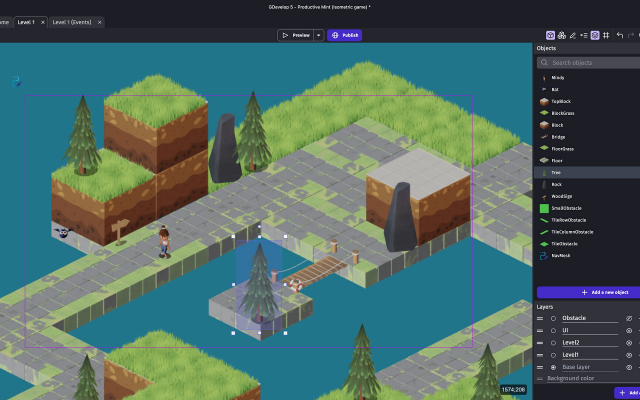
 GDevelopA no-code game engine with an event sheet instead of a scripting language.Freemium0Programming
GDevelopA no-code game engine with an event sheet instead of a scripting language.
GDevelopA no-code game engine with an event sheet instead of a scripting language.Freemium0Programming
GDevelopA no-code game engine with an event sheet instead of a scripting language.GDevelop builds games out of events - conditions and actions picked from a list - rather than code, which makes it a common first engine. It handles tilemaps, 2D lighting, physics and multiplayer, exports to web, desktop and mobile, and the underlying engine is open source.
0 0 pieces -
 5 screenshots
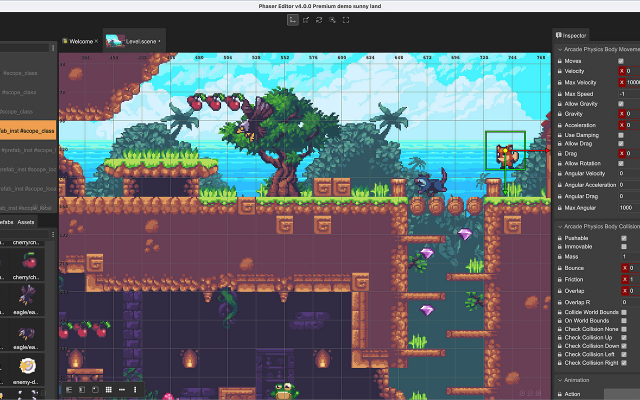
 PhaserThe most used JavaScript framework for 2D games in the browser.Free0Programming
PhaserThe most used JavaScript framework for 2D games in the browser.
PhaserThe most used JavaScript framework for 2D games in the browser.Free0Programming
PhaserThe most used JavaScript framework for 2D games in the browser.Phaser is the most used JavaScript framework for 2D games in the browser. It covers sprites, tilemaps, physics, input, audio and scene management, has a very large body of examples and tutorials behind it, and runs anywhere a browser does.
0 0 pieces -
 4 screenshots
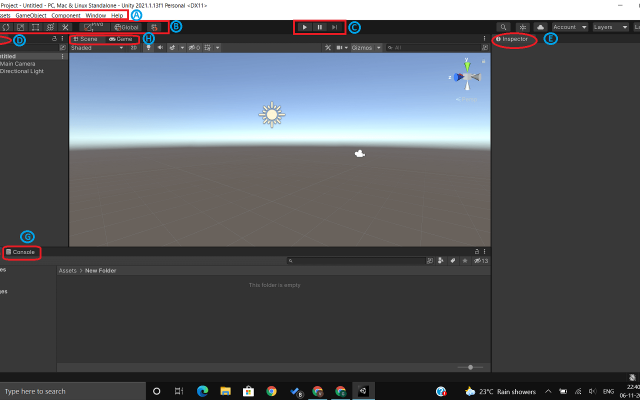
 UnityA general game engine with a widely used 2D pixel art pipeline.Freemium0Programming
UnityA general game engine with a widely used 2D pixel art pipeline.
UnityA general game engine with a widely used 2D pixel art pipeline.Freemium0Programming
UnityA general game engine with a widely used 2D pixel art pipeline.Unity is a general-purpose game engine with a well-worn 2D pipeline: a sprite editor and atlas packer, a tilemap system with rule tiles, 2D lights and shadows, and a large asset store. It is heavier than the dedicated 2D engines, and in return it goes anywhere.
0 0 pieces
There are no more software for your current criteria.
There are no software for your current criteria.
AD| join Patreon to remove ads!
Thanks for your feedback! If you want to say more, please post a Suggestion or Bug Report!
our next patreon goal: $263 / $500