Filtering Options:
69 software:
-
 4 screenshots
 voidspriteopen-source pixel art editor with extensive format support and features useful for game developmentFree24Pixel Art
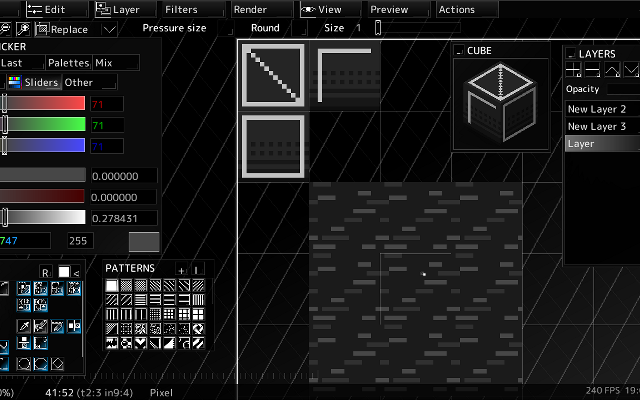
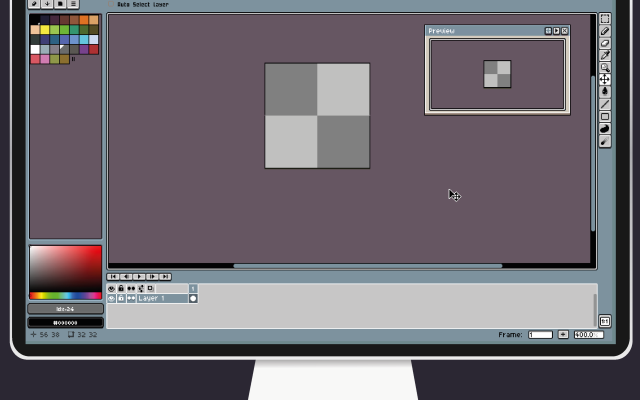
voidspriteopen-source pixel art editor with extensive format support and features useful for game developmentvoid◆sprite is an actively developed cross-platform, open-source pixelart editor.
Has features useful for game development, such as split sessions (multiple files on one canvas) and previews of spritesheet animations, tilesets or 3D cubes.
Other unique features include: layer variants, on-canvas comments, custom patterns, templates and real-time LAN collaboration.
Supports many image formats, including some specific to other editors like Aseprite and GraphicsGale.
Most common color palette formats are supported too, and can be used in a separate indexed editor mode.Features:animationlayerspalette manipulationsprite sheet exportonlinetilemaps2dtilescross platformsprite editorimage conversionccollaboration24 10 pieces updated 12 days ago -
 8 screenshots
 PixiEditorA node-based open source editor with Lospec palette integration.Free14Pixel Art
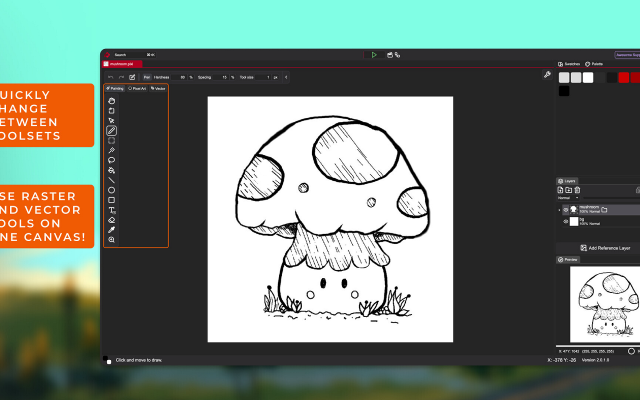
PixiEditorA node-based open source editor with Lospec palette integration.Free Open Source Pixel Art EditorsAnimation ToolsProcedural GeneratorsEffect & Particle GeneratorsLighting & Normal Map Tools ActivePixiEditor is a 2D graphics editor for creating and editing raster, vector, and procedural graphics. It supports pixel art, digital painting, vector shapes and paths, animation, and node-based image processing within the same document.
The editor uses a layer-based workflow combined with a node graph. Layers, effects, and other parts of a document can be represented as nodes and connected to create custom processing pipelines and procedural graphics.
Toolsets
PixiEditor includes several toolsets for different types of 2D work:
Pixel Art - tools designed for pixel-perfect drawing and editing.
Painting - brushes, shapes, and other raster painting tools.
Vector - vector shapes and paths.
These toolsets can be used together in the same document, allowing raster and vector content to be combined.
Animation
PixiEditor includes a timeline for creating frame-by-frame animations. Nodes can also be used to build procedural animations and animate custom effects.
Node Graph
Each document has an associated node graph used to define how its contents are generated and processed. Nodes can represent layers, effects, inputs, and other operations.
The node system can be used for non-destructive editing as well as procedural graphics and animations.Features:layerspalette list integrationpalette manipulationanimationonion skinningsprite sheet exportcustom brushestexture paintingextensions14 42 pieces -
 5 screenshots
 Simple Pixel Art EditorFree in-browser pixel art editor: sprites, animation, auto-tiling tilesets and tilemaps, exports for Godot and Tiled.Free9Pixel Art
Simple Pixel Art EditorFree in-browser pixel art editor: sprites, animation, auto-tiling tilesets and tilemaps, exports for Godot and Tiled.
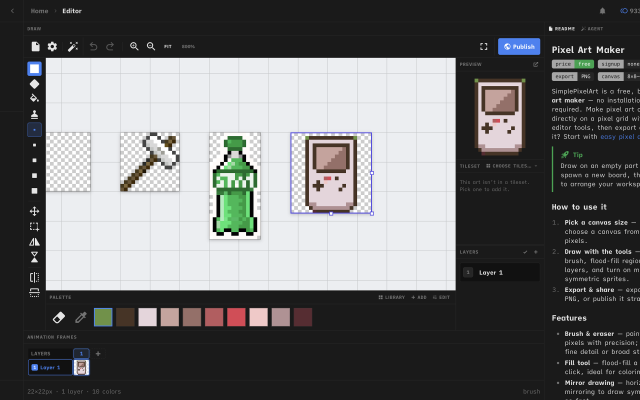
Simple Pixel Art Editor is a free pixel art editor that runs in the browser, with no install or account needed. It covers sprite drawing with layers, mirror drawing and selections, frame-by-frame animation with onion skin and frame tags, and exports to PNG, GIF and sprite sheets.
It also includes tools for game assets: a tileset editor that generates Wang-16 and blob-47 auto-tile terrains from a base tile and exports Godot 4 TileSet (.tres) and Tiled (.tsx) files, a tilemap painter with an isometric mode, a palette library and an image-to-pixel-art converter.
It suits beginners and hobbyists making sprites and tilesets for small 2D games. The source code is MIT-licensed.
Features:animationlayersonion skinningsprite sheet exportgif exportpng exportengine exporttilemap exporttilesisometricpalette manipulationimage conversioncustom brushes9 1 piece -
 12 screenshots
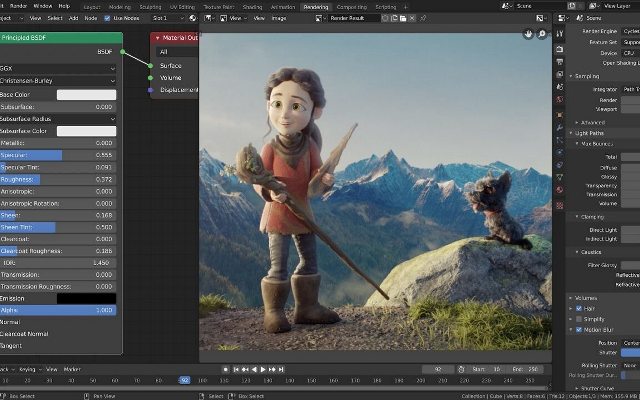
 BlenderThe free 3D suite, widely used for low-poly modelling and 3D-to-pixel-art workflows.Free7Other Low-Spec
BlenderThe free 3D suite, widely used for low-poly modelling and 3D-to-pixel-art workflows.
Blender is the free 3D suite, and it turns up constantly in low-spec work: modelling and texturing low-poly assets, rendering 3D scenes down to a pixel-art sprite sheet, and building the turnarounds that hand-pixelled animation is traced from. Its add-on ecosystem covers most of the rest.
7 39 pieces -
 12 screenshots
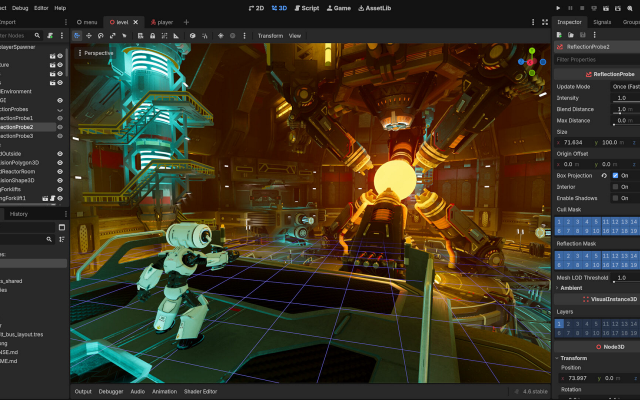
 Godot EngineA free, open source 2D and 3D game engine with excellent pixel art support.Free6Programming
Godot EngineA free, open source 2D and 3D game engine with excellent pixel art support.
Godot has a dedicated 2D renderer with pixel-snapping, nearest neighbour filtering and viewport scaling options that make low-resolution games straightforward.
6 0 pieces -
 PiskelA simple online pixel art and animated sprite editor.
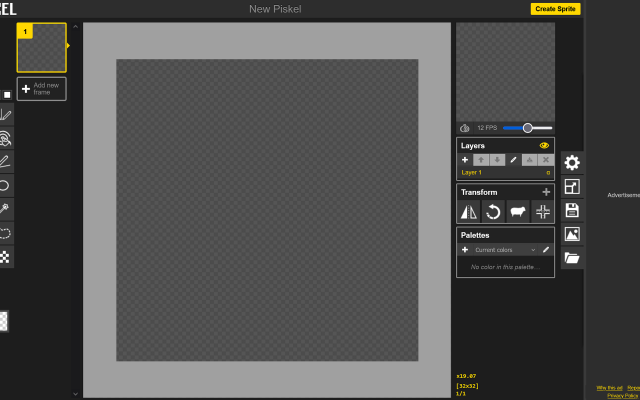
Piskel is an open source editor that runs in the browser, with layers, animation and a public gallery. Development has stopped, but it still works and is a common first editor.
4 58 pieces -
 BlockbenchA low-poly 3D modeling program
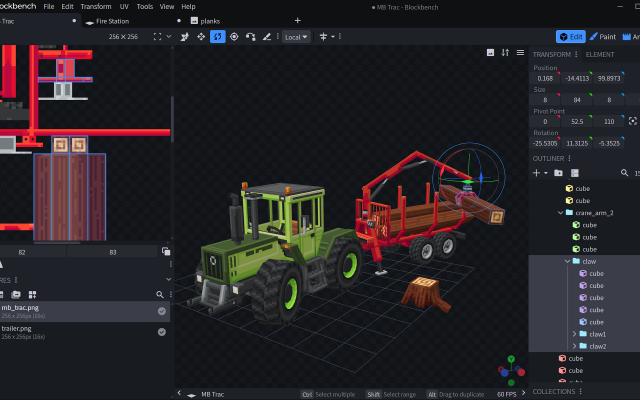
Blockbench is a free and open source editor for low-poly models with pixel art textures. Models can be exported into standard 3D formats, to be shared, rendered, 3D-printed, or used in game engines or games line Minecraft. Modeling, UV mapping, texturing with pixel-art tools, rigging and animating, can all be done in the program.
Blockbench has a clean and beginner friendly interface, but also offers lots of customization and advanced features for experienced 3D artists. Plugins can extend the functionality of the program even further.
Features:low polymodel exportanimationlayerspalette manipulation3d model exportonion skinningcross platformriggingtexture paintingcollaborationnormal mapspluginsuv mapping3d modellingreference plane4 41 pieces -
 11 screenshots
 Pixel ComposerA node-based tool for procedural pixel art and effects.Paid4Pixel Art
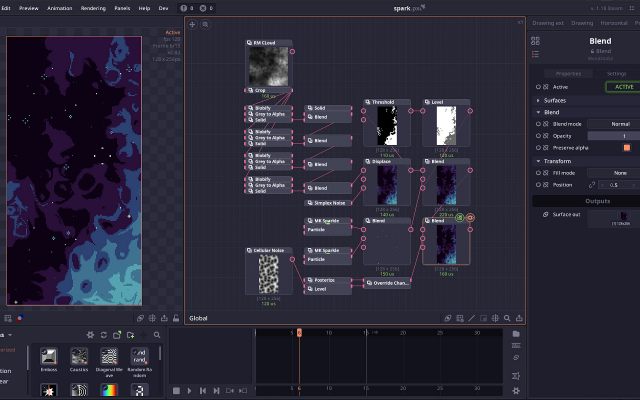
Pixel ComposerA node-based tool for procedural pixel art and effects.Paid $14.99, free trial Open Source Pixel Art Procedural GeneratorsEffect & Particle GeneratorsAnimation Tools Active
Pixel Composer builds effects, animations and generated art from node graphs, so a change to one input flows through the whole result.
4 3 pieces -
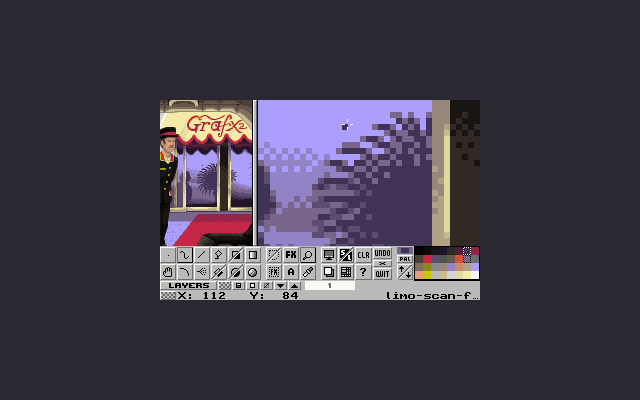 3 screenshots
 GrafX2A DOS-era bitmap editor inspired by Deluxe Paint, still going.Free4Pixel Art
GrafX2A DOS-era bitmap editor inspired by Deluxe Paint, still going.
GrafX2 was made for DOS and has been ported everywhere since. It has tools no other program does, constraints for retro platforms, and an antiquated interface.
4 2 pieces -
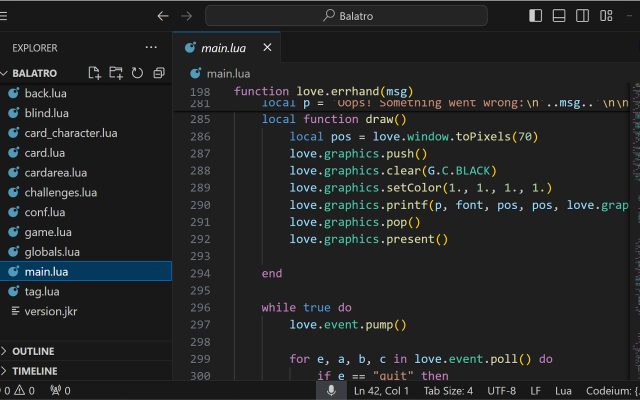
 LÖVEA free framework for making 2D games in Lua.
LÖVE is a small, well documented Lua framework with nearest-neighbour filtering and canvases that make pixel-perfect rendering easy.
4 0 pieces -
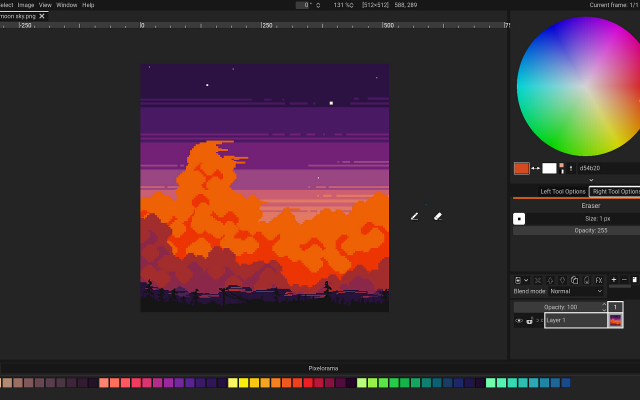
 PixeloramaA free, open source pixel art editor made with Godot.
Pixelorama is a full featured free editor: layers, animation with onion skinning, tile mode, palettes, and an active development pace. It runs on every desktop platform and in the browser.
3 27 pieces -
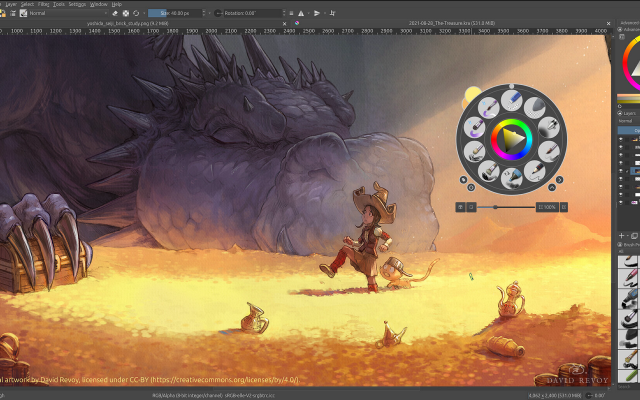 13 screenshots
 KritaA free digital painting program that can be set up for pixel art.Free3Pixel Art
KritaA free digital painting program that can be set up for pixel art.
Krita is intended for digital painting, but its pixel brush presets, indexed color filter and animation timeline make it a capable pixel art tool once configured.
3 9 pieces -
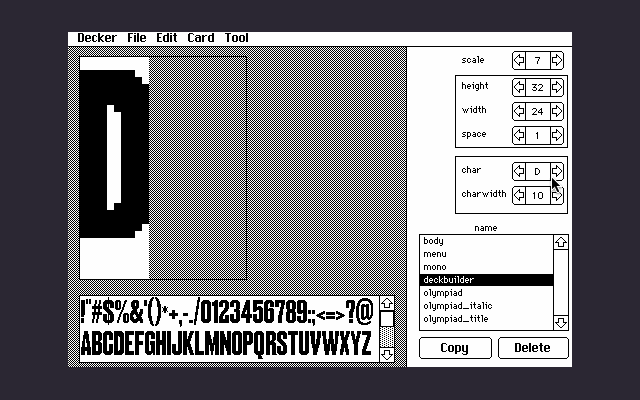 4 screenshots
 DeckerA multimedia platform for creating interactive documents, with sound, images, hypertext and scripted behavior.Pay What You Want3Other Low-Spec
DeckerA multimedia platform for creating interactive documents, with sound, images, hypertext and scripted behavior.Decker is a program where you can make art, games, zines, personal applications and more. It can be thought of as a stack of sticky notes for spatially organizing your thoughts and making quick prototypes, and several other programs have been created with it.3 0 pieces
-
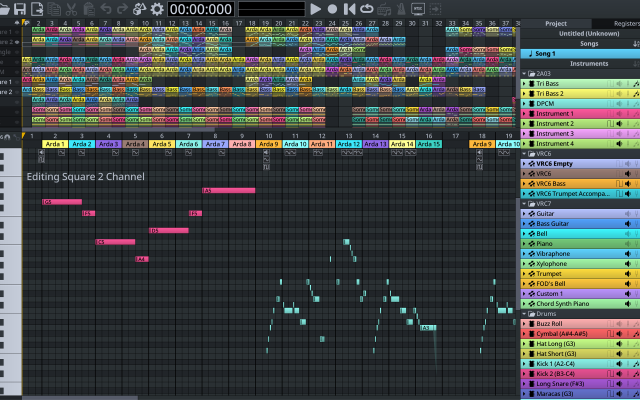
 FamiStudioOpen-source NES music editor with a DAW-like workflowFree Free desktop/Android; iOS US$4.99 one-time. Open Source Chiptune DAWs & SequencersViewers & Players ActiveFamiStudio is a simple music editor for the Nintendo Entertainment System or Famicom. It is targeted at both chiptune artists and NES homebrewers.3 0 pieces
-
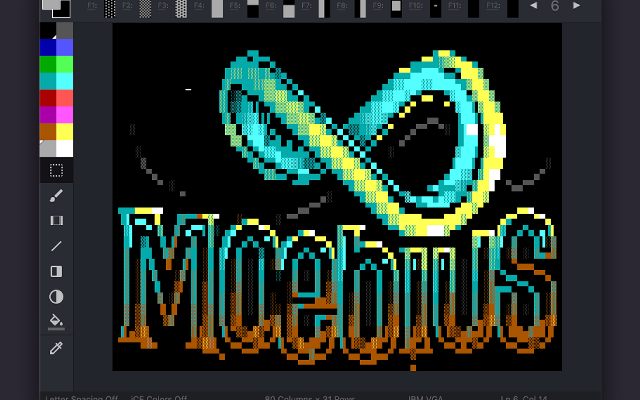
 MoebiusA modern ANSI and ASCII art editor.
Moebius is an ANSI art editor from the Blocktronics scene, with collaborative editing, character palettes and 16-color and iCE color modes.
2 1 piece -
 0 screenshotsBeepBoxBeepBox is a simple, free, open-source, browser-based chiptune sketcherFree2Chiptune
BeepBoxBeepBox is a simple, free, open-source, browser-based chiptune sketcherBeepBox (and it's many many forks) is a free, open-source, browser-based chiptune sketcher. Compose with square, triangle, sawtooth, FM, and noise channels. Your whole song lives in the URL — copy the link, paste it anywhere, the song is there. No accounts, no uploads, no install.2 0 pieces
-
 LibreSpriteA free, open source fork of Aseprite from before its license changed.
LibreSprite continues the last GPL version of Aseprite as a community project. It keeps the familiar layers, animation timeline and palette tools, and adds its own scripting and a browser build.
1 39 pieces -
 GIMPThe free, open source image editor, configurable for pixel art.
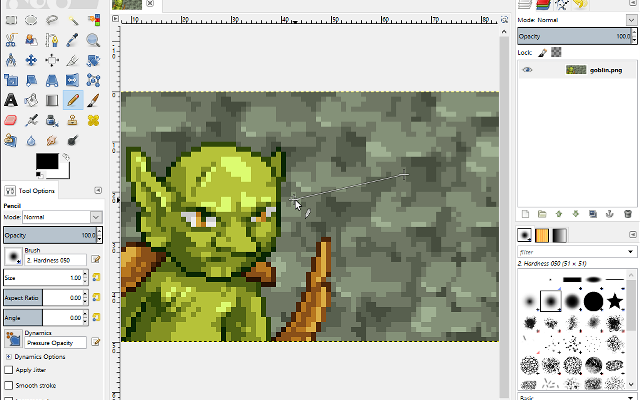
A multi-purpose image editor designed as a free replacement for Photoshop. It can be configured for pixel art with the pencil tool, indexed mode and nearest neighbour scaling.
1 10 pieces -
 2 screenshots
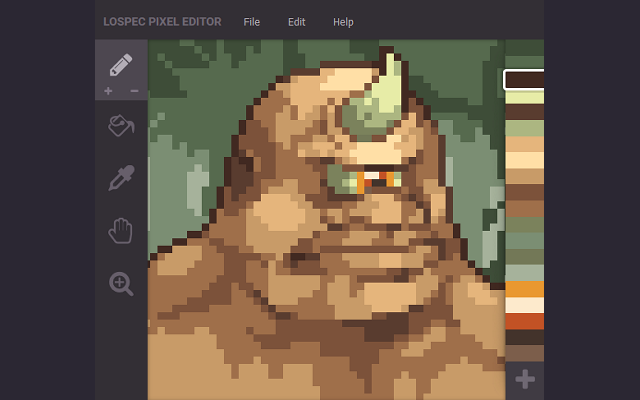
 Lospec Pixel EditorLospec's own simple browser editor, no longer in development.Free1Pixel Art
Lospec Pixel EditorLospec's own simple browser editor, no longer in development.
A basic web-based editor made to be simple and intuitive, which can load any palette from the Lospec palette list. It is no longer in development and may contain bugs.
Features:palette list integration1 4 pieces -
 PetmateA PETSCII editor for Commodore 64 art.
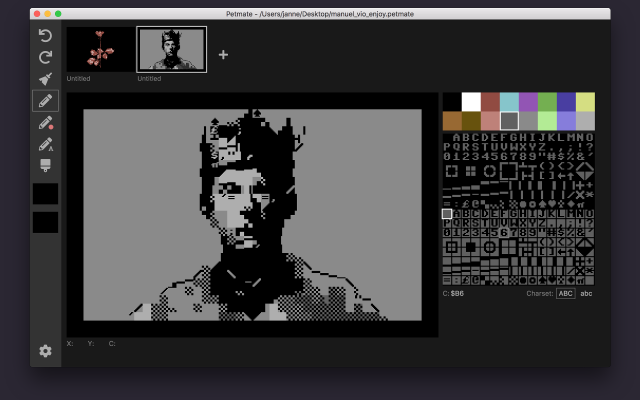
Petmate edits PETSCII images with the C64 character set and colors, and exports to formats the real machine can load.
1 1 piece -
 3 screenshots
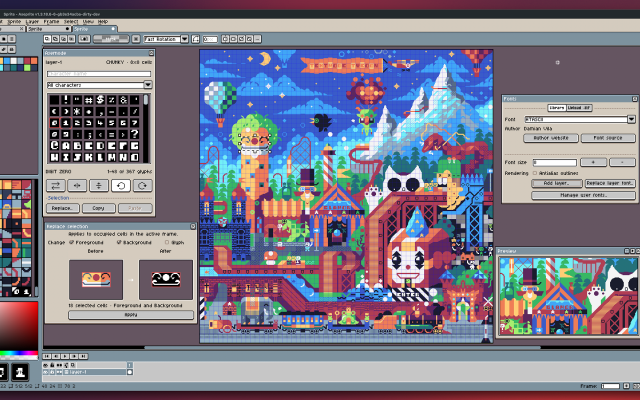
 AsemodeDraw and edit textmode art directly in Aseprite with native tools.Free1Textmode
AsemodeDraw and edit textmode art directly in Aseprite with native tools.
Asemode is an Aseprite extension for character-cell drawing and textmode animation. It lets you paint glyph stamps directly on the canvas with native Aseprite tools, primary and secondary clicks, stamp transforms, and transparent cell backgrounds to layer textmode over pixel art. Each textmode layer can use its own bundled or custom TrueType font, and artwork can be imported and exported as portable .textmode.json files.
1 0 pieces -
 9 screenshots
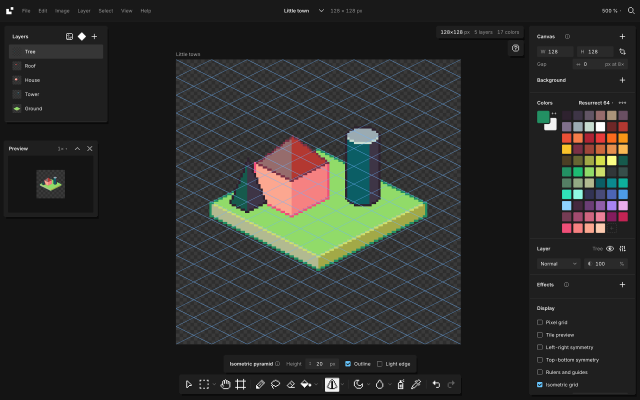
 BaipixA free, open source pixel art editor in the browser, with layers, palettes, isometric tools and clean SVG export.Free1Pixel Art
BaipixA free, open source pixel art editor in the browser, with layers, palettes, isometric tools and clean SVG export.Baipix is a pixel art editor that runs in the browser, with no account and no install. It is free and its source code is public under the MIT license. Drawings are saved in the browser, a deleted one waits in the trash, and files can be downloaded as .baipix. The interface is in English, French and Ukrainian.
It covers the usual pixel art tools (pixel-perfect pencil with a stabilizer, shapes, paint bucket, gradient with dithering, lasso and magic wand selections, symmetry, a tile preview for seamless textures) along with layers, groups, blend modes, layer effects (outline, drop shadow, glow) and reusable components: a sprite drawn once can be placed on any board, and its copies follow it.
Palettes belong to each file: classic presets, the colors used in the drawing, palettes the user keeps, or .hex and .gpl files. Shade and lighten step along the palette’s ramps. A reference image can sit under the drawing to trace over, and the eyedropper picks its colors.
For isometric work it has a 2:1 grid that tools snap to, 2:1 lines, box, cylinder and pyramid tools shaded from the palette, extrusion of flat shapes into volumes, shapes drawn on walls or on the ground, staggered tile previews and images laid onto a face. A file can hold several boards side by side.
Exports: PNG at 1× to 32×, SVG with one path per color and the layers kept as groups, .aseprite files, tilesets for game engines (PNG sheet with a Tiled tileset and map), and the drawing as code (React, CSS, JSON or ASCII).
Its strongest areas are isometric pixel art and work that ends up in design tools or code: components and multiple boards for icon sets and UI assets, and SVG that pastes into Figma as vector shapes. It suits game artists making sprites, tiles and isometric scenes, designers who need pixel icons, and people trying pixel art without installing anything. It has no animation yet, and works best with a mouse or trackpad; tablet support is in progress.
Docs: baipix.app/docs
1 0 pieces -
BfxrAn expanded sfxr with more synths, mixing and a browser version.
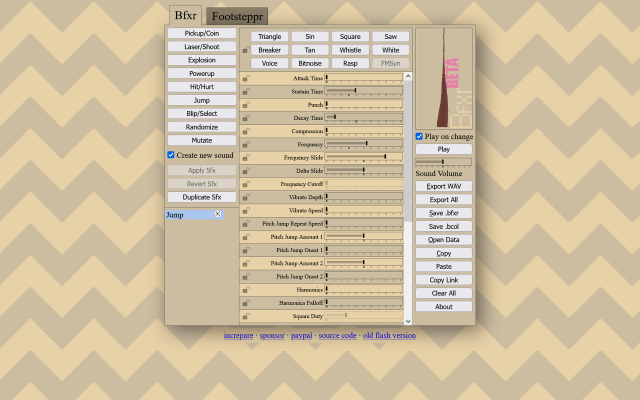
Bfxr adds new waveforms, filters and a mixer to the sfxr formula, and runs in the browser.
1 0 pieces -
 2 screenshots
 BitsyA tiny browser editor for little worlds of 8x8 tiles and short conversations.Free1Programming
BitsyA tiny browser editor for little worlds of 8x8 tiles and short conversations.
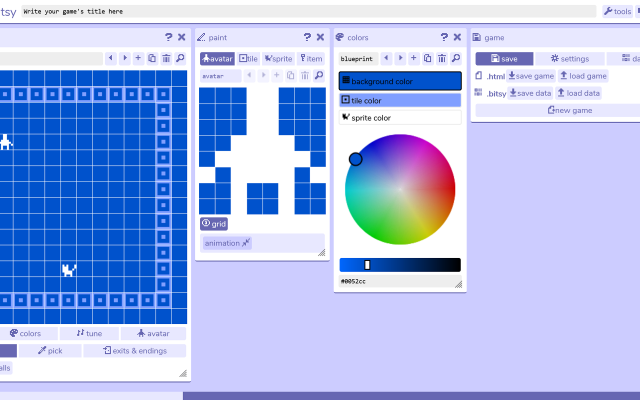
Bitsy is a tiny editor for making small worlds: a few rooms of 8x8 tiles, an avatar that walks around them, and short conversations with the things in them. The limits are the point - there is no scripting to speak of and two colours at a time - and a finished game is a single HTML file.
1 0 pieces
There are no more software for your current criteria.
There are no software for your current criteria.
Thanks for your feedback! If you want to say more, please post a Suggestion or Bug Report!
our next patreon goal: $301 / $500