Filtering Options:
42 software:
-
 4 screenshots
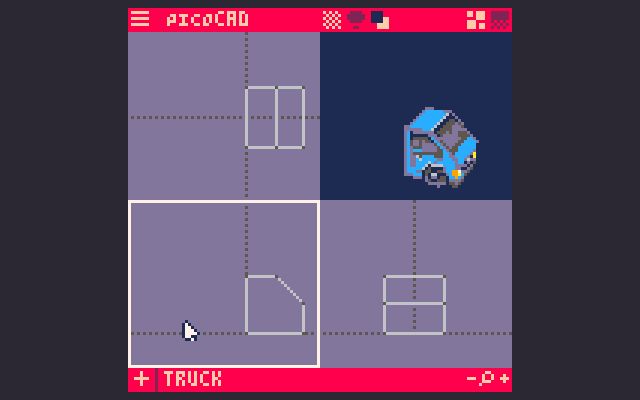
 picoCADA tiny low-poly modeller that paints every model with one small texture sheet.Paid4Low-Poly
picoCADA tiny low-poly modeller that paints every model with one small texture sheet.
picoCAD builds small low-poly models out of a handful of shapes and textures them with a single tiny texture sheet, in a deliberately constrained toolset. Models and turntable renders export straight out of it.
4 9 pieces -
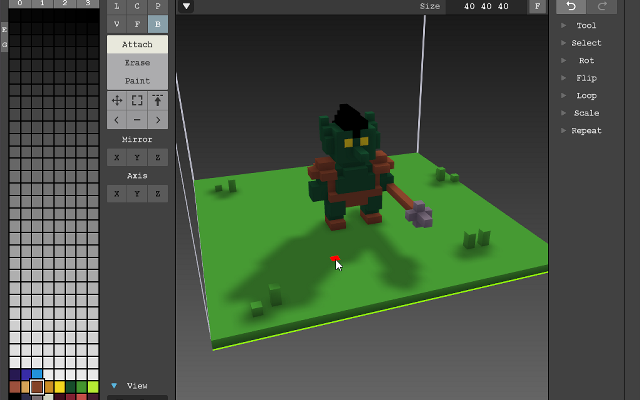
 MagicaVoxelA free lightweight voxel editor with a built-in path tracer.
The most popular voxel editor: fast, small, and with a renderer good enough that most voxel art you see was rendered inside it.
3 2 pieces -
 3 screenshots
 GrafX2A DOS-era bitmap editor inspired by Deluxe Paint, still going.Free3Pixel Art
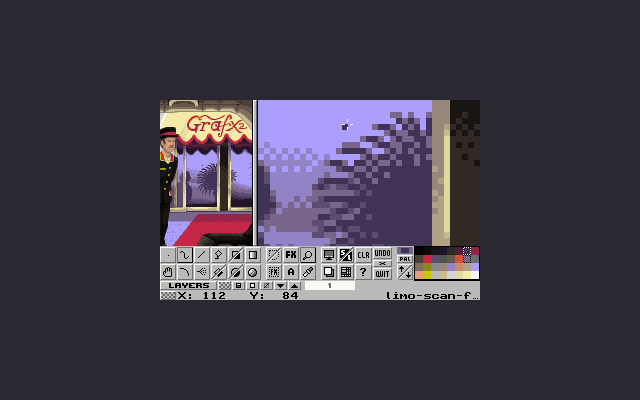
GrafX2A DOS-era bitmap editor inspired by Deluxe Paint, still going.
GrafX2 was made for DOS and has been ported everywhere since. It has tools no other program does, constraints for retro platforms, and an antiquated interface.
3 1 piece -
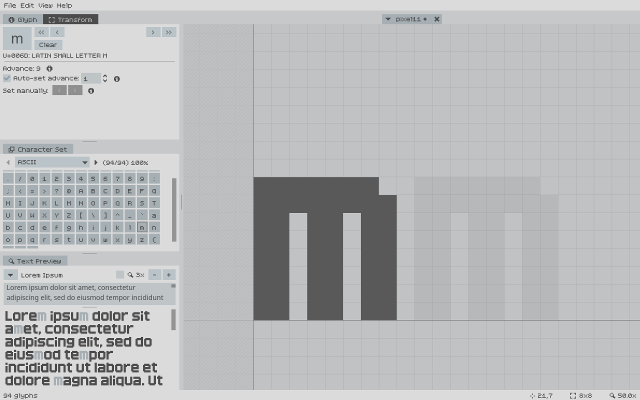
 PixelForgeDraws pixel fonts and exports them as real TTF files.
PixelForge is a font editor built for pixel fonts: draw each glyph on a grid, set the spacing and kerning, and export a TrueType file that installs like any other font. It can also import an existing TTF - if it is genuinely a pixel font it detects the size and loads the glyphs back onto the grid for editing.
3 0 pieces -
 3 screenshots
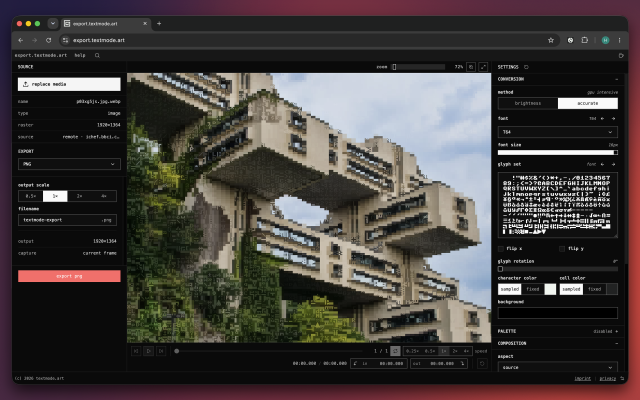
 export.textmode.artA browser converter for turning images, GIFs, and video into configurable textmode art.Free3Textmode
export.textmode.artA browser converter for turning images, GIFs, and video into configurable textmode art.export.textmode.art converts images, animated GIFs, video, and direct media links into textmode art in the browser. It provides glyph, font, palette, color, framing, and post-processing controls, plus frame-accurate playback and export ranges for animated sources. Everything is processed locally in your browser, and outputs include raster, vector, text, JSON, frame-sequence ZIP, GIF, MP4, and WebM downloads.3 0 pieces
-
 2 screenshotsGraphicsGaleA veteran Japanese animation-focused pixel art editor, now freeware.Free2Pixel Art
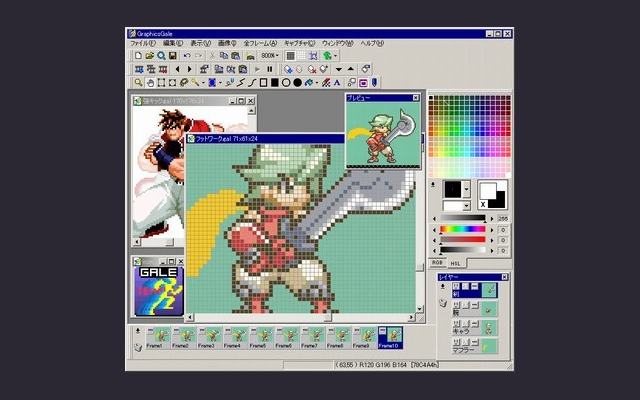
GraphicsGaleA veteran Japanese animation-focused pixel art editor, now freeware.
GraphicsGale has been in use since 2005 and excels at animation, with onion skinning and frame-by-frame preview. It was made freeware in 2017. The interface shows its age but the tools are precise.
2 3 pieces -
 3 screenshotsBitFontMaker2A browser grid editor for bitmap fonts, one glyph at a time.Free2Pixel Art
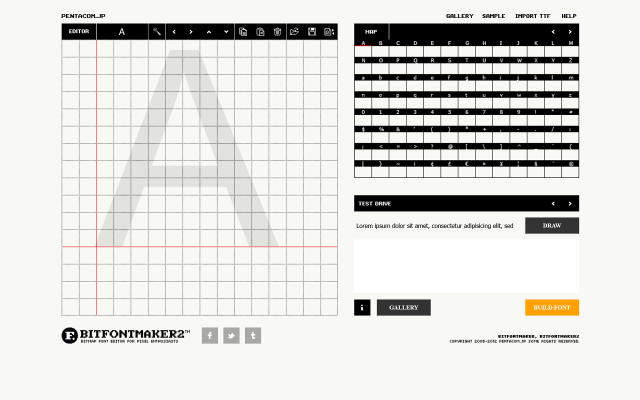
BitFontMaker2A browser grid editor for bitmap fonts, one glyph at a time.
BitFontMaker2 is a bitmap font editor that runs in a browser: draw each character on a small grid, set the widths, and download a TrueType file. It has been around a long time and stayed simple, which is why it is still the quickest way to get a pixel font out of an idea.
2 0 pieces -
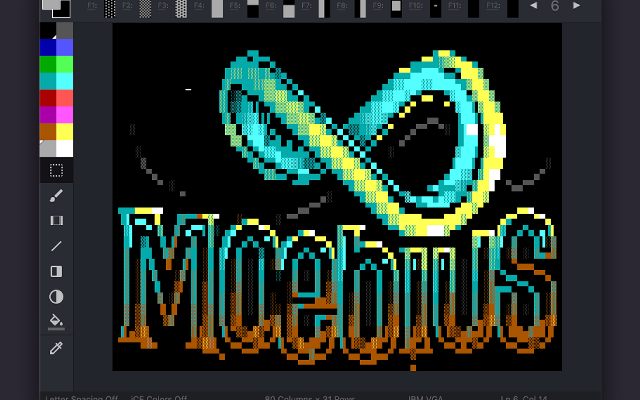
 MoebiusA modern ANSI and ASCII art editor.
Moebius is an ANSI art editor from the Blocktronics scene, with collaborative editing, character palettes and 16-color and iCE color modes.
2 0 pieces -
 2 screenshots
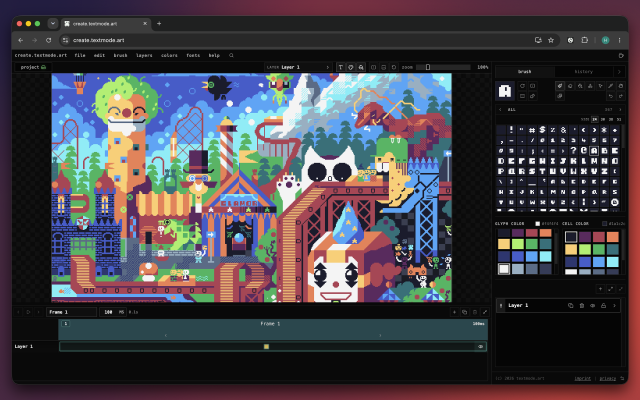
 create.textmode.artA visual canvas for drawing and animating textmode art in the browser.Free2Textmode
create.textmode.artA visual canvas for drawing and animating textmode art in the browser.create.textmode.art is a browser workspace for character-grid drawing and animation. Each layer can use its own bundled or custom 8 × 8 font, opacity, and blend mode. The app also supports frame animation, Lospec and .hex palettes. It exports still images as PNG or SVG, and frame animations or drawing-history timelapses as GIF, MP4, or WebM, and saves portable .textmode project files.2 0 pieces
-
 2 screenshots
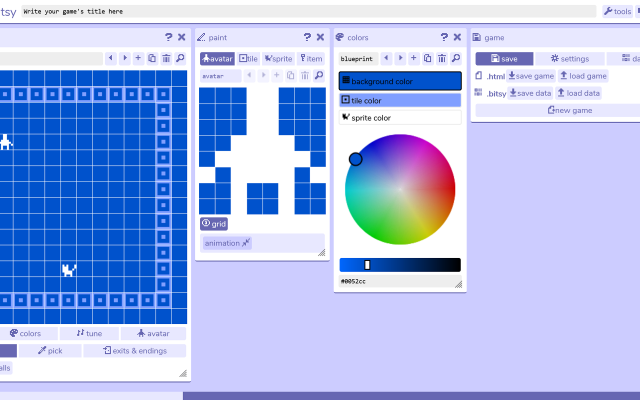
 BitsyA tiny browser editor for little worlds of 8x8 tiles and short conversations.Free1Programming
BitsyA tiny browser editor for little worlds of 8x8 tiles and short conversations.
Bitsy is a tiny editor for making small worlds: a few rooms of 8x8 tiles, an avatar that walks around them, and short conversations with the things in them. The limits are the point - there is no scripting to speak of and two colours at a time - and a finished game is a single HTML file.
1 0 pieces -
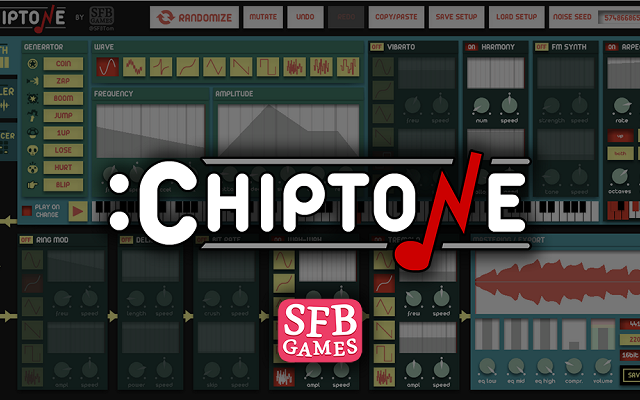
 ChipToneA free, deep sound effect generator with a visual interface.
ChipTone builds sound effects from layered oscillators, envelopes and effects with a lot more control than an sfxr style generator.
1 0 pieces -
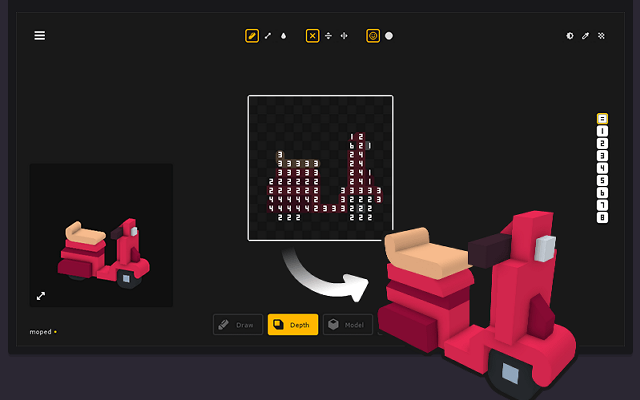
Kenney ShapeBuilds chunky 2.5D icons and sprites out of stacked flat shapes.
Kenney Shape builds chunky 2.5D icons and sprites by stacking flat shapes and giving them depth, rather than by modelling in 3D. It is a fast way to get a consistent set of game icons, and exports both flat images and models.
1 0 pieces -
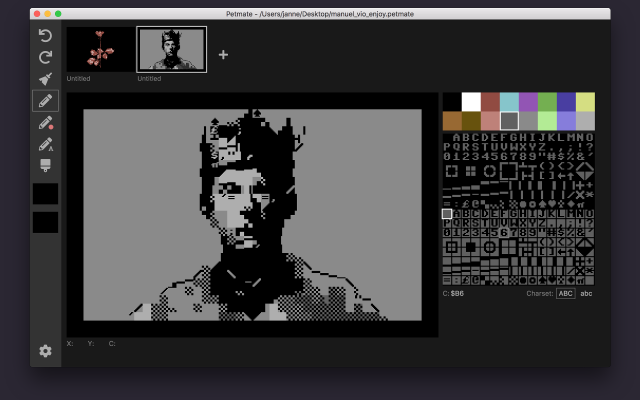
PetmateA PETSCII editor for Commodore 64 art.
Petmate edits PETSCII images with the C64 character set and colors, and exports to formats the real machine can load.
1 0 pieces -
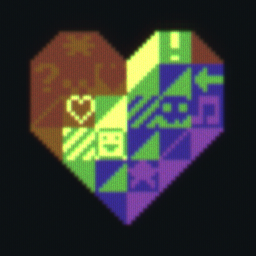 PlaysciiAn open source ASCII art, animation and game-making tool.
Playscii edits and animates ASCII art with arbitrary character sets, converts images to text art, and has a mode for building simple games.
1 0 pieces -
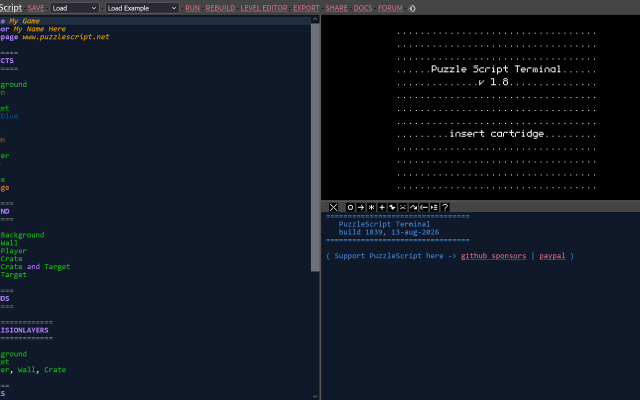
PuzzleScriptWrites a whole puzzle game as a short text file in the browser.
PuzzleScript is a browser engine where an entire puzzle game is a short text file: a legend of characters, a set of rewrite rules, and the levels drawn as ASCII. Games run and share as a single link, which has made it the usual home for small tile-based puzzle experiments.
1 0 pieces -
 Pyxel EditA pixel art editor built around tiles and tilesets.
Pyxel Edit is a smaller pixel art program focused on tile editing: paint tiles once and every placed copy updates, then export the tileset and tilemap for your engine. It also handles simple animation.
1 0 pieces -
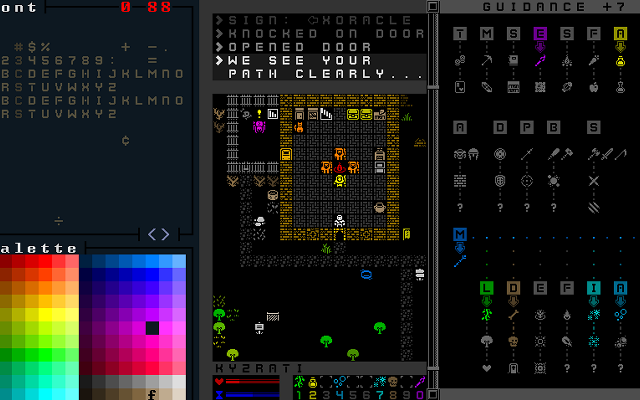
 REXPaintA powerful ASCII art editor made for roguelike development.
REXPaint edits ASCII art with layers, custom fonts and an XP format that many roguelike engines can load directly.
1 0 pieces -
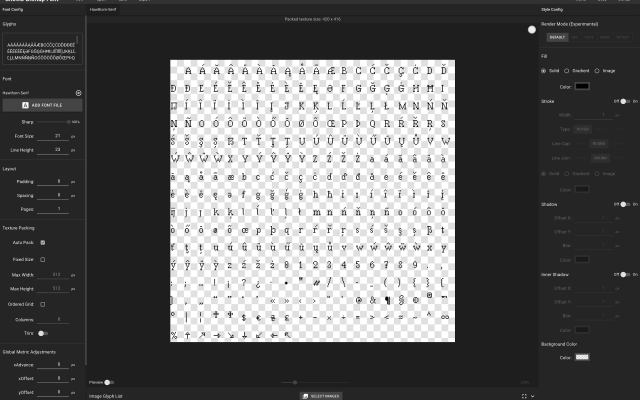
 SnowBamboo BMFTTF to PNG bitmap font converter.The software allows you to convert any TrueType font (TTF) into a PNG bitmap font sheet, along with JSON, FNT, or TXT files containing spacing and kerning data. The exported bitmap fonts are ready to use in most game engines.
You can adjust spacing, add special visual effects to your font, and preview the final bitmap font live in the app.
1 0 pieces -
 4 screenshots
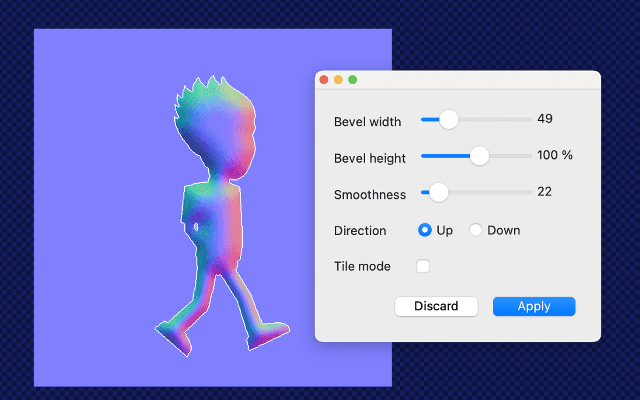
 SpriteIlluminatorPaints normal maps onto sprites so 2D art can be lit dynamically.Paid1Pixel Art
SpriteIlluminatorPaints normal maps onto sprites so 2D art can be lit dynamically.
SpriteIlluminator generates normal maps for 2D sprites, either algorithmically from the shape of the art or painted by hand with its own brushes, so a flat sprite reacts to moving lights in an engine. It also does specular and emissive maps, and previews the result under a light you can drag around.
1 0 pieces -
 5 screenshots
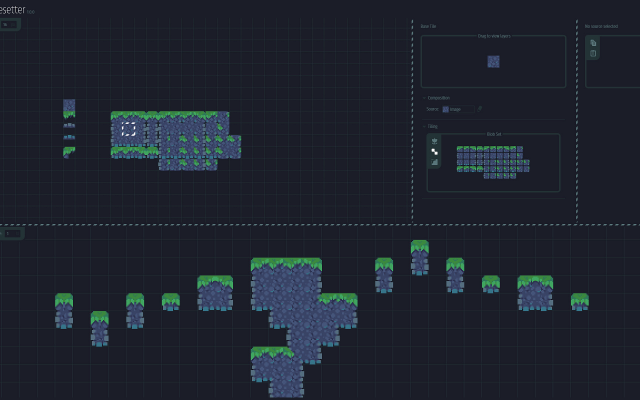
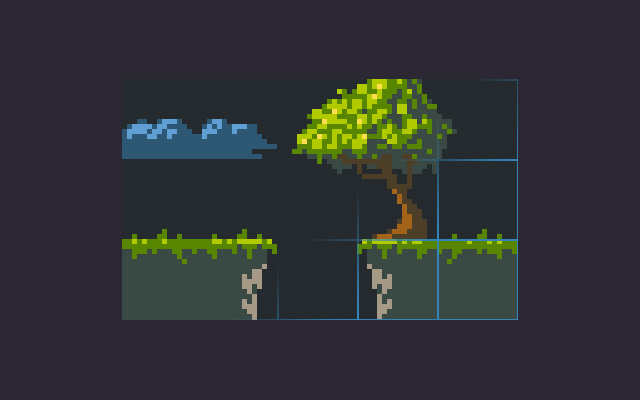
 TilesetterTurns a handful of hand-drawn tiles into a complete auto-tiling tileset.Paid1Pixel Art
TilesetterTurns a handful of hand-drawn tiles into a complete auto-tiling tileset.
Tilesetter takes a handful of hand-drawn tiles and works out the rest: corners, edges and transitions are generated into a complete auto-tiling tileset, which it can then export along with a map. It is aimed at the part of tile work that is repetitive rather than creative.
1 0 pieces -
rxA modal pixel art editor driven from the keyboard, in the spirit of vi.
rx is a pixel art editor for people who live in a terminal. It is modal in the way vi is - keys are commands, not tools on a palette - and everything is configurable from a text file. It handles layers, animation strips and palettes, and exports sprite sheets.
1 0 pieces -
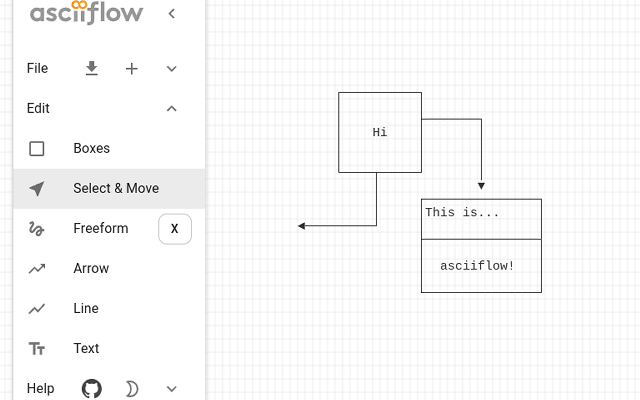
 ASCIIFlowA browser scratchpad for drawing boxes, arrows and diagrams in plain ASCII.
ASCIIFlow is a browser scratchpad for drawing boxes, arrows and labels in plain ASCII, for diagrams that have to live inside a comment or a text file. There is nothing to install and nothing to sign into.
0 0 pieces -
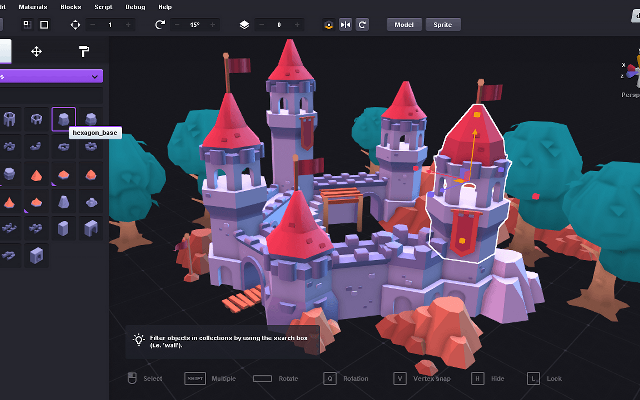 6 screenshotsAsset ForgeBuilds low-poly models by snapping premade blocks together.Freemium0Low-Poly
Asset ForgeBuilds low-poly models by snapping premade blocks together.
Asset Forge makes models by kitbashing: drop blocks from its kits into a scene, snap them together, recolor them and export the result as a model or as rendered 2D sprites.
0 0 pieces -
 4 screenshots
 FileToVoxConverts meshes, point clouds, images and heightmaps into voxel models.Free0Voxel Art
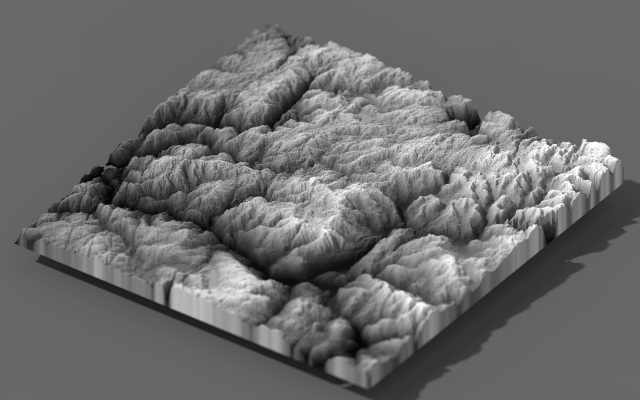
FileToVoxConverts meshes, point clouds, images and heightmaps into voxel models.
FileToVox converts things that are not voxel models into voxel models: meshes, point clouds, heightmaps, images and Minecraft schematics all become MagicaVoxel files. It runs from the command line, which makes it easy to put in a pipeline.
0 0 pieces
There are no more software for your current criteria.
There are no software for your current criteria.
AD| join Patreon to remove ads!
Thanks for your feedback! If you want to say more, please post a Suggestion or Bug Report!
our next patreon goal: $263 / $500